


You know your attachment style. You’ve read the articles, taken the quizzes, maybe even talked about it in therapy. But you keep pulling away from people who get too close. Or you keep chasing people who won’t commit. Awareness didn’t stop any of it. There’s a reason for that — and it has nothing to do with trying harder.
Why Knowing Your Attachment Style Isn’t Enough
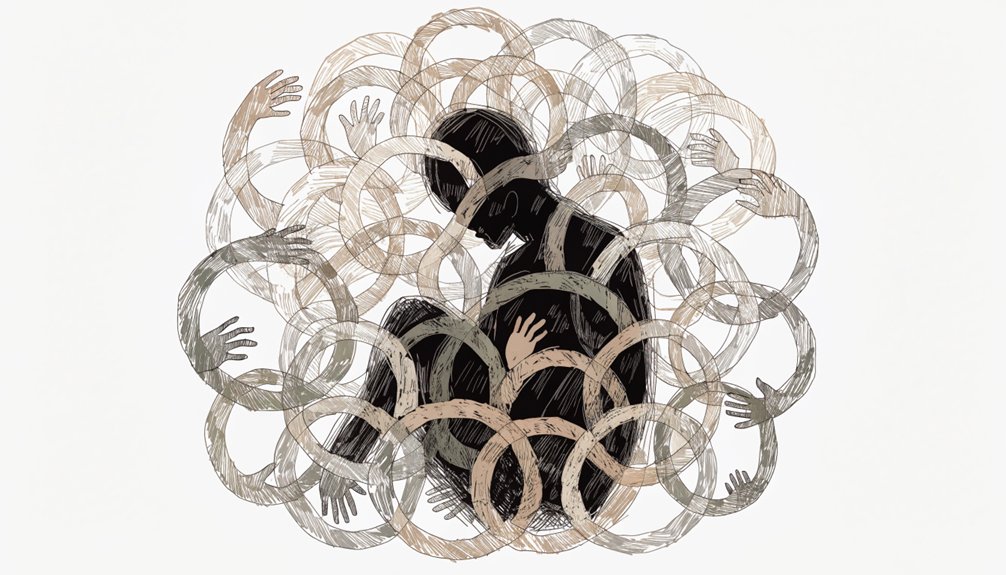
Knowing your attachment style doesn’t change how you behave in relationships. That knowledge is declarative. Your behavior runs on implicit memory — automatic scripts built from early experiences that operate below conscious awareness.
These scripts are your emotional templates. They shape your stress responses before you can think. They pull you toward familiar relational dynamics even when those dynamics hurt you. Awareness doesn’t overwrite them. Corrective experiences do.
Reinforcement cycles keep the old patterns locked in. Familiar behavior gets repeated because familiarity feels safe. Intermittent reward makes it stronger. Your attachment roles — caretaker, pursuer, withdrawer — become part of your identity schemas. They feel like personality. They aren’t. They’re learned.
Your nervous system is wired to seek safety, not health, which means familiar pain can feel more compelling than unfamiliar peace. Co-regulation deficits mean that under pressure, your habitual reactions take over. You and your partner escalate together or shut down together. Knowing the label for that doesn’t stop it. Only repeated practice in new conditions begins to shift it. Therapy provides a space to build communication and boundary-setting skills that make those new conditions possible.
Why Your Brain Reacts Before You Can Think Straight
Your brain sends emotional signals to your amygdala before your thinking brain even registers what’s happening.
Stress then locks your attention onto the threat and cuts access to the reasoning you’d need to respond differently.
The limbic system processes perceived threats and triggers emotional reactions faster than your cortex can form a conscious thought, meaning your limbic response occurs first.
These rapid threat responses are shaped by early caregiver experiences, as attachment patterns formed in childhood act like an autopilot in human interactions.
Your Brain Hijacks You
The brain reacts to threat before you’re aware there’s a threat. Sensory input hits the thalamus and routes directly to the amygdala in milliseconds. Limbic activation fires before your cortex finishes processing what just happened. That’s not a flaw. It’s the system working as designed.
But here’s the problem. Neurochemical influence floods your body fast. Norepinephrine sharpens threat detection. Cortisol follows. Prefrontal suppression kicks in and cognitive bias takes over. Your thinking narrows. Emotional reactivity runs the moment.
The stress response doesn’t care whether the threat is real or perceived. It treats your partner’s tone the same way it treats physical danger. Emotional availability registers as a survival signal, meaning even subtle shifts in how someone speaks to you can be enough to trip the alarm.
Repeat this enough and synaptic reinforcement locks it in. Habit formation does the rest. The reaction stops feeling like a choice because it isn’t one anymore.
Unpredictable caregiving during childhood trains the brain’s alert system to stay permanently switched on, meaning unpredictable parenting heightens vigilance that follows you into every adult relationship you enter.
Stress Narrows Your Focus
When stress hits, your brain doesn’t wait for you to catch up. Your stress response activates a narrow threat perception pathway that processes danger before your conscious mind gets involved.
That’s focus narrowing — and it has real consequences for how you function.
Your attention bias shifts toward whatever feels threatening. Everything else gets filtered out. This emotional filter isn’t selective in a useful way. It drops context, misses detail, and increases cognitive overload by forcing your brain to work on incomplete information.
Implicit triggers from past relationships feed directly into this system. You don’t recognize them as old patterns. You experience them as present facts. Your attachment style shapes coping by determining whether you lean into support, shut down emotionally, or swing between both extremes under pressure.
That’s where decision making breaks down. You’re not choosing a response. You’re executing one that was already loaded. Stress triggers a release of norepinephrine and dopamine that weakens prefrontal connections, reducing your capacity for self-control precisely when you need it most.
Habits Override Insight
Stress narrows your focus and loads your threat circuits. When that happens, your prefrontal cortex steps back. Your basal ganglia steps forward. The result is habit formation running the show before you’ve had a chance to think.
This isn’t a personal failure. It’s a structural one. Your brain defaults to low-cost, automatic responses under pressure. Those responses were built through repetition. They execute faster than conscious thought can intervene.
Insight requires cognitive flexibility. Cognitive flexibility requires prefrontal resources. Under stress, those resources are already spent.
You can know your pattern completely. You can name it, trace it, explain it to someone else. None of that stops the automatic sequence from firing. Knowledge lives in one system. Habit lives in another. Early emotional experiences create long-term patterns that persist unconsciously, meaning the habits running your relationships were installed long before you had the language to question them.
The habit loop follows a fixed sequence: a trigger initiates the cycle, a familiar routine executes in response, and a reward reinforces the behavior. Awareness of the loop is the first step in changing habits, but awareness alone does not interrupt the sequence already in motion.
How Relationships Keep Reinforcing Your Attachment Patterns
The partners you choose often confirm what you already expect from relationships.
An anxious person tends to land with someone emotionally unavailable, and an avoidant person tends to land with someone who pushes for more closeness.
Each role feeds the other, and the cycle keeps running because both people are doing exactly what their attachment patterns trained them to do.
Partners Mirror Your Patterns
Once your attachment style forms, it doesn’t stay locked inside you — it plays out in every relationship you enter. Familiarity bias pulls you toward partners who reproduce the same relational dynamics you grew up with. That’s not coincidence. It’s pattern recognition working against you.
Your behavioral confirmations do the rest. You expect withdrawal so you pursue harder. That pursuit triggers the withdrawal you feared. The feedback mechanisms run in both directions.
Co-regulation effects mean your nervous system syncs with your partner’s. Their stress patterns become yours. Their communication styles shape which emotional triggers you respond to most.
Interpersonal patterns lock in through repetition. Attachment reinforcement happens quietly across hundreds of small interactions.
Cycles Reinforce Old Expectations
Every relationship you enter runs on the same underlying script your early experiences wrote. Your brain expects certain outcomes, and those expectation cycles shape what you notice and how you respond.
When your partner acts ambiguously, you interpret it through your attachment lens. That interpretation drives your behavior. Your behavior then pulls a reaction from your partner. That reaction confirms what you already believed. This is behavior reinforcement in its most literal form.
The loop doesn’t require a bad partner to keep running. It just requires repetition. Each cycle strengthens the neural pathways tied to your attachment responses. Over time those pathways become the default route.
Change becomes harder not because you’re broken but because the pattern has been practiced. Familiarity makes it feel like truth.
Why Attachment Patterns Resist Change Even When You See Them
Seeing a pattern clearly doesn’t mean you can stop it. Insight lives in your conscious mind. Your attachment responses don’t.
These patterns are stored as implicit memory — automatic, procedural, and fast. They activate before your prefrontal cortex can intervene. By the time you recognize what’s happening, the emotional hijacking is already complete. Your body has responded. Your behavior has followed.
This is why awareness alone changes very little. Declarative knowledge and procedural memory operate through separate neural systems. Knowing something intellectually doesn’t update the system running your automatic responses.
Your amygdala processes threat signals faster than your reasoning can catch up. When an attachment cue appears — a delayed text, a cold tone, a moment of distance — your nervous system reacts first. Cortisol releases. Old scripts activate.
Neuroplastic change requires repeated corrective experiences over weeks and months. A single moment of clarity rewires nothing.
What the Research Says Actually Changes Attachment Patterns

Attachment patterns can change. Research confirms this, and the mechanisms behind that change are specific.
Security priming works. Repeated exposure to supportive imagery or memories shifts how secure you feel, and multi-session protocols produce longer-lasting results. Volitional goals matter too. When you explicitly want to reduce anxiety or avoidance and set goals around it, your trajectory changes over time.
Targeted therapies like Emotionally Focused Therapy alter attachment-related internal models and emotion regulation patterns. Couple responsiveness accelerates change. When your partner responds consistently and supportively, your working models update.
Natural catalysts like new relationships, parenthood, or recovery from loss can also reshape your orientation without formal intervention.
The strongest change predictors are motivation and relational quality. Attachment interventions work best when they directly address your specific pattern. General support helps less than focused, structured work.
Change is possible. It’s just not automatic.
How to Start Breaking Your Attachment Patterns in Real Relationships
Knowing that change is possible doesn’t tell you where to start. Real change happens through action in actual relationships, not just insight. Begin with vulnerability experiments: make one small request or disclosure per week and track what happens. This is exposure practice. You’re testing assumptions, not confirming them.
Use emotional tracking to notice when your nervous system activates. Write it down. Patterns become visible when you record them consistently.
Apply communication repairs quickly after ruptures. A brief, specific acknowledgment works better than a lengthy explanation. Boundary techniques follow the same logic: state the limit, name the alternative, and stop talking.
Monitor partner responses without interpreting them immediately. Give data time to accumulate. Self-awareness strategies only work when you separate observation from reaction.
Stress management matters here too. High arousal narrows your options. Lower it first, then respond. This sequence is repeatable. Practice makes it reliable.
People Also Ask
Can Your Attachment Style Change on Its Own Without Therapy or Intervention?
Yes, your attachment style can shift on its own. Life experiences impact your patterns, and self awareness benefits growth. Through relationship dynamics exploration and emotional regulation strategies, you’ll naturally move toward greater security over time.
Do Attachment Styles Affect Friendships and Work Relationships Too?
Yes, your attachment dynamics shape both friendship influences and work relationships. You’re emotionally available with secure bonds, yet trust issues and communication styles silently strain your social connections and support systems elsewhere.
Are Some Attachment Styles Harder to Change Than Others?
Yes, some attachment styles are harder to change. In attachment theory, your avoidant behavior patterns resist emotional resilience work, while anxious styles shift faster. Disorganized attachment needs trauma-focused care before improving your relationship dynamics.
Can Medication Help Rewire Deep-Seated Attachment Patterns?
Medication *can* rewire your patterns—but here’s the catch: its neuroplasticity effects only stick when you combine medication benefits with therapy integration, mindfulness practices, self-awareness techniques, and behavioral reinforcement to reshape your relational dynamics and build lasting emotional resilience.
How Long Does It Typically Take to Shift an Insecure Attachment Style?
Shifting an insecure attachment style typically takes 1–3 years of consistent effort. You’ll accelerate self awareness growth through therapy and deepen change by practicing relationship journaling to track your evolving patterns daily.
The Bottom Line
You’ve mapped the territory. Now you have to walk through it. Change doesn’t happen in a journal or a therapy session alone. It happens in the moment someone pulls away and you stay calm anyway. It happens when you don’t send the text. When you ask for what you need out loud. The pattern is a groove worn deep. You’re cutting a new one. That takes repetition in real time with real people.
References
- https://www.throughthewoodsmhs.com/blog/understanding-relational-patterns-and-attachment-why-we-repeat-the-same-relationship-struggles
- https://www.psychologytoday.com/us/blog/fulfillment-at-any-age/202412/yes-you-can-change-your-attachment-style
- https://papers.ssrn.com/sol3/papers.cfm?abstract_id=5180276
- https://www.psychologytoday.com/us/blog/nurturing-self-compassion/201703/are-we-doomed-repeat-our-relationship-patterns
- https://stephanierigg.com/why-you-keep-repeating-the-same-relationship-patterns/
- https://creativeartspsychotherapynyc.com/blog/why-do-i-keep-ending-up-in-unhealthy-relationships
- https://www.psychologytoday.com/gb/blog/the-freedom-to-change/202309/why-changing-your-attachment-style-might-not-be-so-easy
- https://freudly.ai/blog/anxious-attachment-triggers/
- https://www.psychologytoday.com/nz/blog/the-freedom-to-change/202309/why-changing-your-attachment-style-might-not-be-so-easy
- https://www.psychologytoday.com/us/blog/the-freedom-to-change/202309/why-changing-your-attachment-style-might-not-be-so-easy