

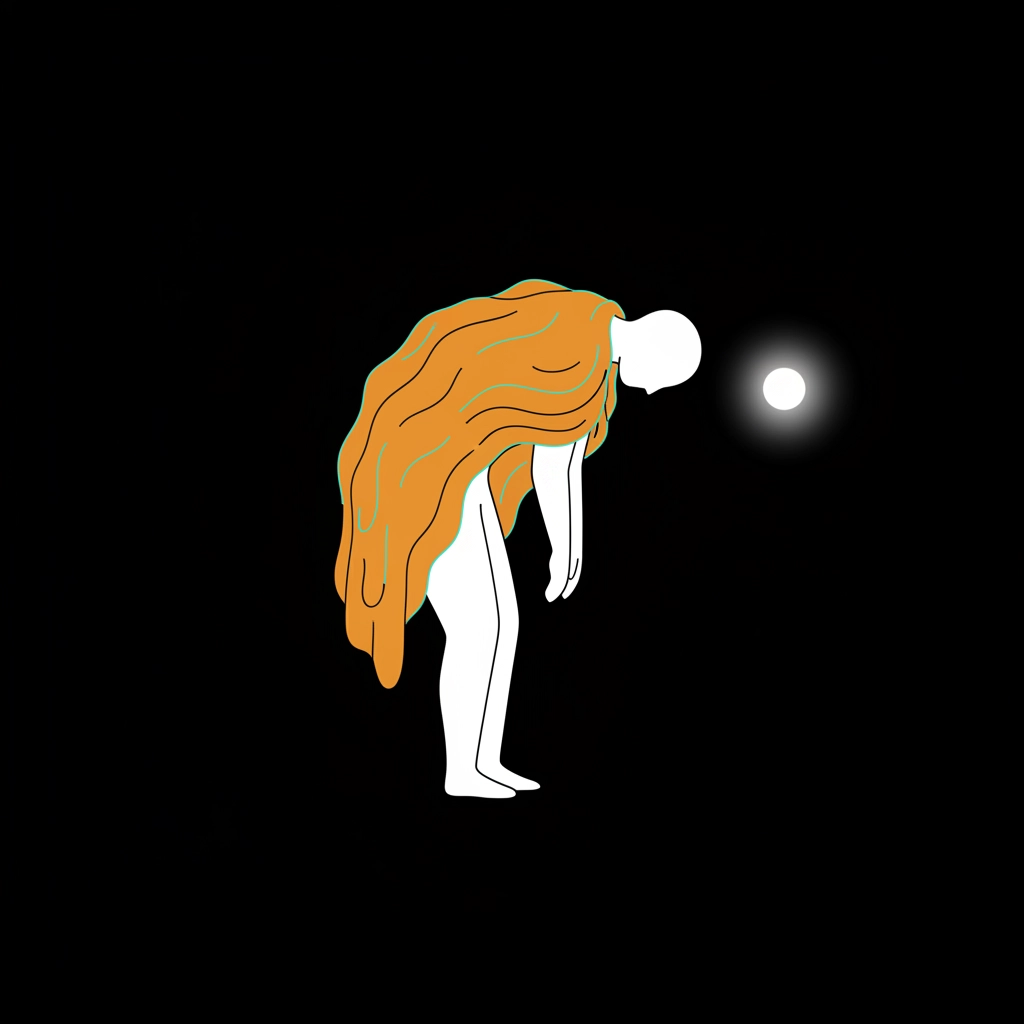
You rest. You sleep.
You still wake up exhausted.
Something in your life is taking more than it should. You have felt it for a long time but cannot point to exactly what. This shows you what that something is — where it is coming from, why rest has not been fixing it, and what it has been costing you to carry it without a name for it.
A private written analysis — 1,200 to 2,600 words — the most in-depth of our three. It shows you what has been quietly taking too much from you, why rest has not been fixing it, and what it has been costing across your energy, relationships, and sense of self. Written entirely by a psychology-informed behaviour analyst who reads everything you share before writing a single word. Reviewed by a second analyst before it reaches you. Specific to you. Not a wellness plan. Not a type.
You have told yourself it is normal.
It is not normal. It has a source.
You sleep. You rest. You take the break. You come back to the same heaviness. Because the source is still there.
You give constantly — to work, to relationships, to everyone who needs something. There is nothing left for you.
You do things you are supposed to enjoy. You feel nothing much from them. Something underneath has gone quiet.
Your life looks fine from the outside. That makes it harder to explain — even to yourself.
Something specific has been
taking too much. This names it.
Most people who feel chronically drained have spent years explaining it away. They blame being busy. They call it a bad phase. They tell themselves everyone feels this way. Most of them have been carrying a real and specific cost for far longer than they have admitted.
The drain has a source. It may be a relationship. A role you play. A pressure you put on yourself that has become invisible through repetition. Your analyst reads what you share and names what it is — not what you think it is, but what the evidence in your words is pointing to.
A specific source — relationship, role, internal pressure, or pattern of self-suppression — identified from what you shared. Not a category. The actual thing.
Rest restores energy. It does not remove a source. This shows you why recovery has not lasted and what would actually need to change.
The costs you absorbed so gradually they stopped feeling like costs. What you have accepted as just how your life is — that is not how it has to be.
Energy, relationships, enjoyment, sense of self. This shows you where the cost has been landing most — and what has quietly been taken from you.
“You described three people you take care of. You listed their needs carefully and in detail. When the question turned to what you need, you wrote one sentence and immediately qualified it. That is not a coincidence — it is a pattern that shows up everywhere in what you shared. You have built a life where everyone else’s requirements are visible and yours are negotiable. The exhaustion is not from the work. It is from the continuous low-level suppression of your own presence in your own life. That suppression has become so habitual you stopped noticing the effort it takes. This analysis is going to show you exactly when it started — and what it has been costing beyond just the tiredness.”
Four things that are true
after you read this.
Not a vague sense that something is wrong. A specific identification of the source — what it is, where it lives in your life, and why it has been so hard to see.
The costs you absorbed so gradually they stopped feeling like costs. You will see clearly what you have been accepting as just how your life is.
Why recovery has not lasted. What would actually need to change for the heaviness to ease at the source, not just temporarily.
You cannot address what you cannot see. Once you can name what is draining you honestly, you have something accurate to act on.
The person reading your intake
does this for a living.
A psychology-informed behaviour analyst reads your intake before writing a single word of your analysis. Their training is specifically in reading what sits underneath exhaustion, drain, and repeated patterns of depletion — what has been normalised, what has been given away, and what the gap between how a life looks on the outside and how it feels on the inside is pointing to. This is not a side project for them. It is the work.
No analysis is started until the analyst has read everything you shared. They are not filling in a template. They are reading your specific situation.
Before your analysis reaches you, a second person reads it. Nothing vague, generic, or ungrounded in what you shared survives that review.
This is one of the most common
human experiences. And the least named.
Nearly three in four people carry exhaustion that rest does not fix.
28% say they feel it very often or constantly.
Most go years without understanding what is actually driving it.
Gallup, Employee Burnout: Causes and Cures, 2020
Unexplained fatigue — exhaustion with no identifiable medical origin —
is nearly 3 times more common than fatigue linked to illness.
If rest is not fixing it, the source is almost certainly not physical.
Yoon et al., Frontiers in Public Health, 2023 — 91 studies, 623,624 participants
Women are nearly twice as likely to report feeling exhausted as men,
even sleeping the same number of hours.
The drain is not coming from sleep.
It is coming from something else entirely.
CDC / National Health Interview Survey, 2010–2011
Because naming how you feel is not the same as understanding where it is coming from.
In their own words.
All testimonials are from verified purchasers.
“I kept telling myself I just needed better sleep and more discipline. But deep down I knew the exhaustion was not that simple. This helped me see what has actually been taking so much out of me and why rest alone has not been enough.”
“There is a special kind of fatigue that does not look dramatic from the outside. You still function. You still show up. But something keeps draining the life out of ordinary days. This captured that with unsettling accuracy.”
“It helped me understand that what I thought was random emotional exhaustion had a pattern underneath it. That realisation alone was worth it.”
“I found the experience unexpectedly calming. It did not overwhelm me. It gave me a clearer understanding of why certain parts of my life feel heavier than they should.”
“I didn’t even realise how much I had started calling my exhaustion normal adult life. Reading this was like hearing someone say: no, that’s not random. There is a reason.”
“It was precise without being clinical, and compassionate without becoming soft. What it named was not just burnout. It was the hidden drain underneath how I have been living. That is a much more useful thing to understand.”
Simple on your side.
Careful on ours.
When payment confirms, you land on a page with one button: start your intake. Nothing else. No waiting. No email to check. Begin immediately or return later — your progress saves automatically at every step.
It starts with two quick selections.
Then a first set of questions built around where the exhaustion shows up,
what you have normalised, and what it has been costing you most.
Based on what you share, a second set of questions is generated
specifically for you. No two people go through the same intake.
It feels like a conversation, not a form.
You do not need to be a good writer.
On every open question, you can speak your answer instead of typing it.
Your voice is automatically transcribed into text.
Some of the most useful intakes we receive are spoken ones.
A psychology-informed behaviour analyst reads your full intake before writing a single word. They are reading for where the real cost is hiding, what you have stopped counting as a problem, and what the gap between how you describe your life and how you feel inside it is pointing to. No analysis is started from a partial read.
This is the most in-depth of our three analyses. Before it reaches you, a second person reads it. Nothing vague, generic, or ungrounded in what you shared survives that review. The standard every analysis is held to: you feel seen in a way that surprises you.
When your analysis is ready, you receive an email with a link. You click and access your analysis in your account. Readable on screen. Downloadable as a PDF. Standard delivery: 5 business days from when you submit your intake. Most people read it more than once. The second read usually lands harder than the first.
What people ask
before they start.
A private written analysis — 1,200 to 2,600 words — the most in-depth of our three. It identifies the source of your drain, shows you what you have been normalising, explains why rest has not been fixing it, and shows you what it has been costing across different areas of your life. Delivered to your account when it is ready. Readable on screen and downloadable as a PDF.
You land on a thank-you page with one button: start your intake. The intake takes most people 15–25 minutes. You can begin immediately or return later — your progress saves automatically. Once you submit, your intake goes to your assigned analyst. They read everything before writing begins. When your analysis is ready, you receive an email with a link. You click and your analysis is in your account.
No. On every open question, you can speak your answer instead of typing it. Your voice is automatically transcribed into text. You can also stop and return later — your progress is saved automatically.
You do not need to be. You can speak every open question instead of writing it. Your analyst reads what you share — not how you phrase it. What you are trying to say matters more than how you say it. Some of the most useful intakes we receive are spoken ones.
Standard delivery is 5 business days from when you submit your intake. Your analyst takes the time your situation requires — that is not a delay, it is what careful work takes. When it arrives, it will have been written, reviewed, and checked by a second person before it reaches you.
This is one of the most common things people say before they start. The drain is not caused by having a bad life. It is often caused by something running inside a life that looks fine — a pattern of obligation, a relationship dynamic, a standard you hold yourself to that has become invisible through habit. Having a good life on paper does not mean the cost is not real. It often means it has been harder to name.
This analysis shows you what is draining you — clearly and specifically. Most people find that once they can see the source accurately, they know what it means for their life. The problem is rarely not knowing what to do. It is not having an honest picture of what is actually happening. That is what this gives you.
Drain is rarely a single source — it typically involves energy, relationships, the roles you play, and the internal patterns that sustain all of it. Understanding it fully requires more time from your analyst and a more involved reading of what you shared. The price reflects the depth of the work, not a tier system.
No. This is a private written analysis for people who feel drained and want to understand where it is actually coming from. It is not a clinical service, not a substitute for therapy, and not appropriate for people in active crisis. If you are in crisis, please reach out to a qualified professional.
What you share is seen only by the people working on your analysis. Never shared. Never published. No full name required. Privacy is not just a policy here — it is the reason this service exists in the form it does.
If your analysis does not show you where the drain is actually coming from — something you had not been able to name — you pay nothing. 7-day window from delivery. The refund form is in your account dashboard and in the email that delivered your analysis. No explanation required. The refund is processed regardless. That is our confidence in what we deliver.
You have been carrying this
for a long time.
What if someone could just show you why?
Think about how long you have felt this way.
Think about what it has already taken from you — in energy, in relationships, in the parts of your life that have quietly gone flat while you were too tired to notice.
You have already paid for this in other ways. In the years you called it normal. In the rest that did not help. In the version of your life this thing has been quietly shaping without a name.
One price. One private analysis. Finally understanding what has been taking too much — and why.
Human-reviewed · Private · 1,450+ analyses delivered