Every page that answers this gives you the same answer: anxious attachment. Your parents were unpredictable, so now you hold on too tight.
For a lot of people that is right. For a lot of others it is the wrong engine entirely, and it sends them looking for a fear they do not have.
Researchers who study fast attachment separate two of them, and the distinction is the most useful thing on this page. One runs on need: the fear of being left, the hypervigilance, the checking. The other runs on want: the pull of falling itself, the rush, the reward. The researcher who named the second one puts it in four words. It is a want process, not a need process.
They are not the same thing wearing different clothes either. When the two are measured against each other, they overlap only moderately, somewhere around a fifth to a third. Most of each is not the other.
So before anything else, work out which engine is running yours. Advice built for the fear does very little for the want, and the other way around.
Which engine is yours?
Read both columns. One will describe your last three months better than the other.
Need: the fear of losing them
- You check whether they have read it.
- A slow reply changes your whole afternoon.
- You want reassurance, and it wears off in hours.
- The strong feeling arrives with a knot, not a lift.
- You have done things to make somebody stay that you would not do again.
Want: the pull of falling
- The beginning is the best part, every time.
- You have fallen for somebody you barely know, more than once.
- You know within a week, and you are usually sure.
- There is a lift to it rather than a knot.
- Friends have told you they saw things about a person that you did not.
Both can be true. If they both are, read the fear reasons first: the fear is the one that takes things from you fastest.
And there is a third possibility that is not about you at all. Attachment anxiety runs high in the stretch before a relationship exists, when nothing has been said out loud yet, and the researchers who measured that call it a normative experience. You do not need an anxious attachment style to feel attachment anxiety in the fourth week with somebody who has not told you what this is.
Is it normal to get attached this fast?
Almost every source here says yes, and says it in the same breath: forming attachments is what people do, wanting closeness is not neediness, and rapid attachment is not a character flaw.
One page disagrees, and we are going to leave it standing rather than smooth it over. It argues plainly that it is not normal to make yourself that vulnerable to somebody that fast, and that the cost lands on you. One author, no citations, and it ranks alongside the others. It is worth reading against the rest.
Neither side calls it a disorder, because it is not one. It turns into something worth acting on in four ways.
- It is costing you the screening. You are far along with somebody before you know very much about them.
- It repeats. Not one intense start, but the same shape three or four times over.
- It is deciding your behaviour. The checking, the waiting, the asking again, the things you say yes to so they do not go.
- It ends the same way. Either you are left, or the feeling drops out of you the moment it is returned.
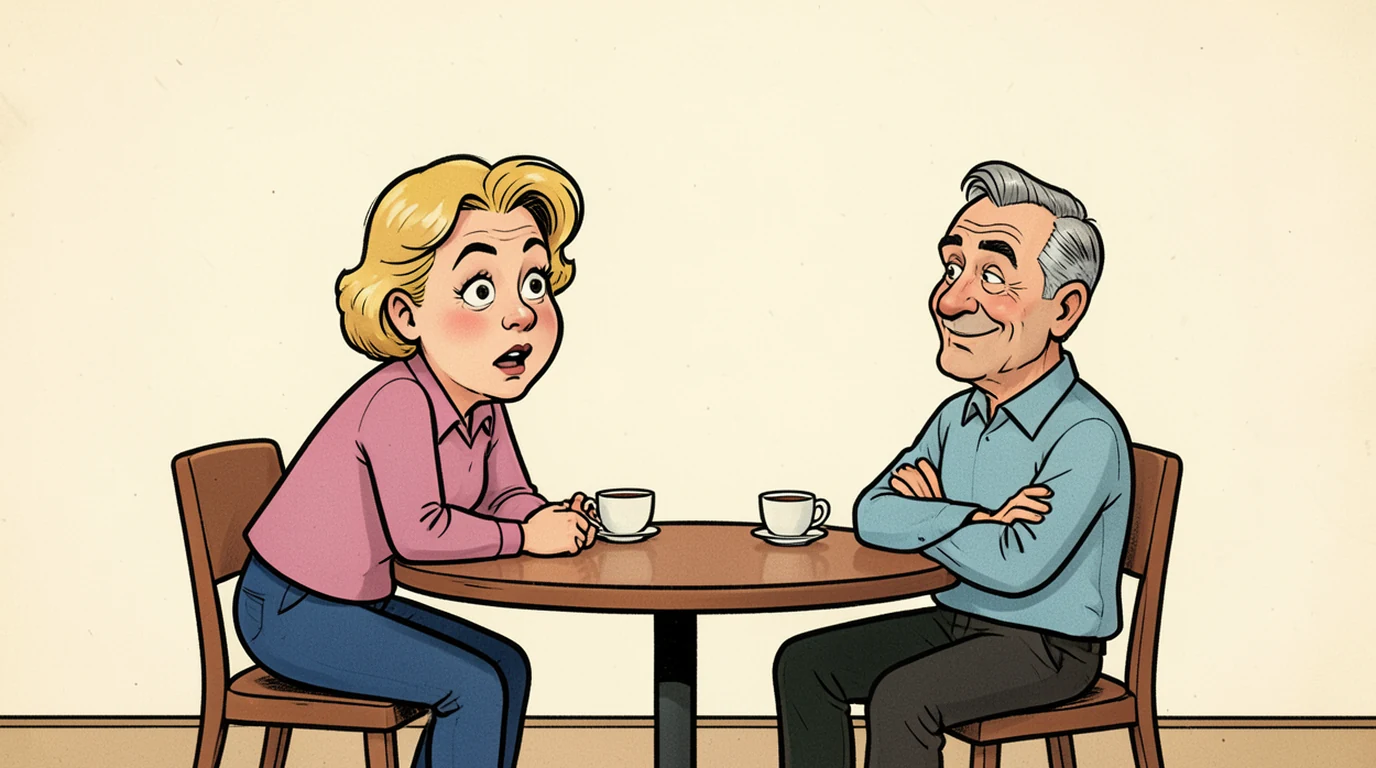
Seven signs, and which engine they point at
Read these seven. Say true or false to each one.
Two and five point at need. Three and four point at want. One and seven can be either. Six is its own thing, and it has a section of its own further down.
Somebody on a forum wrote the first one better than any page: "Getting attached too fast, putting people on pedestals, has led me to ruin a lot of potentially good relationships."
The seven reasons people attach this fast
Most of the time it is two of these at once, not one. Read all seven. Under each one there is a line to check against your own life.
1. The system was set early, and the setting stuck.
The standard account: a small child whose care was warm on Tuesday and absent on Wednesday learns to watch, and the watching never fully switches off. Health services and clinics all describe it that way. But here is the honest version of how strong that link is, which no page on this question prints. The big review in 1995 found that a parent's own interview matched their infant's classification about three quarters of the time. Then a synthesis of three decades, ninety-five samples and nearly five thousand parent and child pairs, found the connection weaker than that, and could not explain it by how sensitive the caregiver was. The field has a name for what is missing. It calls it the transmission gap. So this reason is real, and it is not destiny.
What it costs you: you read a habit as your nature, and habits are the more workable of the two.
This is you if the watching started long before the person you are watching.2. It is a want, not a need.
This is the reason almost nobody gets told about. Some people fall fast because falling itself is the good part: the interest, the discovery, the rush of it. Researchers call the trait emophilia, and they are careful to say it is driven by reward rather than by fear. It is not the same as anxious attachment and it is not a lighter version of it. Measured against each other they overlap only moderately. If this is your engine, every piece of advice about calming your fear of abandonment has been aimed at the wrong organ, which is why none of it worked.
What it costs you: not the falling. The skipping of everything you would normally check first.
This is you if it lifts you rather than frightens you, and you are usually sure by the second week.3. You are short of something else, and this arrived.
The sources converge on this without much argument. Loneliness, a stretch of upheaval, a season with nobody to tell things to, a low patch in what you think of yourself. Then somebody is kind, and a small kindness lands like water on somebody who had not noticed how thirsty they were. Nothing about that is foolish. It is just that the size of the feeling is partly about the shortage, and only partly about them. If the thirst is really about how you see yourself, that has a longer answer: why do I hate myself.
What it costs you: you hand somebody a job they never applied for, and then they cannot do it.
This is you if it always happens in the emptier months, not the full ones.4. It is the situation, not you.
There is a stretch at the beginning where nothing has been said, nothing is settled, and everything can be read two ways. Researchers watched that stretch and found attachment anxiety running high in it, pushing people to seek closeness and feeding passionate love, in people whose attachment style was perfectly ordinary. They called it normative, which is a careful word for common. Add an app that hands you high feedback and frequent rejection in the same hour and the stretch gets longer and louder.
What it costs you: you diagnose yourself with a condition when you were in a situation.
This is you if it settles down the moment somebody actually says what this is.5. You filled in the gaps yourself.
Early on you do not know very much, so the mind supplies the rest, and it supplies flattering material. Clinicians describe this as idealisation and it is the engine under a crush. Somebody on a forum put it in seven words: a crush is a lack of information. That is also why the fall can happen with somebody you have barely met, and why the drop can come the moment real information arrives and does not match what you wrote.
What it costs you: you fall for a draft you wrote, and then blame the person for the edits.
This is you if the feeling was strongest when you knew the least.6. Somebody sold you the story.
Films, songs, the spark, love at first sight, the idea that intensity is evidence. Several of the sources put this near the top of their lists, and one adds the sharp version: nobody ever taught you how trust is built, so speed is the only measure of closeness you have. It also leaves a person defenceless against being love-bombed, because attention arriving fast and hard looks exactly like the story.
What it costs you: you read the volume of a feeling as proof of its quality.
This is you if you would struggle to name what you actually check for in a person.7. The fear runs the other way.
The last one looks like the opposite of the question and it is the same machine. You attach hard, and the moment it is returned something drops out of you. One person on a forum wrote it exactly: "the SECOND I think they like me back I just feel uncomfortable with them." Clinicians describe an avoidant pattern where closeness itself is the alarm, so the safest position is wanting somebody who is not quite available. If this is yours, the distance is doing a job, and it has its own page: why do I push people away.
What it costs you: you only want it while it is uncertain, so you can never keep it.
This is you if the interest dies on the day the uncertainty does.
What emophilia is, and what it is not
More people search this word than search the question itself, so here it is plainly.
Emophilia is the tendency to fall in love fast and easily. It used to be called emotional promiscuity, which was a worse name for it. The key point, and the one that gets lost: it is about wanting, not about needing. The pull is towards the falling, not away from being alone.
Three things worth knowing before you decide it is you.
- It behaves like a trait, not a mood. The psychometric work calls it a rather stable construct, closer to a personality dimension than to a phase.
- It is not a diagnosis. Nothing in it is a disorder, and no health service treats it as one.
- Nearly all of the research comes from one group. The people who tested the scale say so themselves, which is the sort of caveat that should travel with a term rather than get dropped.
What it predicts has been measured, and this is the part the friendly write-ups skip. It comes with more relationships and more unfaithfulness. In one study, people high in it were the most attracted to any target put in front of them, including people who scored high on the harder personality traits. The problem is not that they love too much. The problem is that the screening step never happens, so who arrives is left to chance.
Read plainly: the feeling is not the fault. The missing week between the feeling and the commitment is.
And the other half: why do I lose the feeling so fast?
Half the people asking this question are also asking the opposite one, and no page on this subject puts them together.
The shape is familiar. Two weeks of certainty, then it drains out, often at the exact moment it stops being uncertain. Somebody wrote it in a sentence: "In the first 2 weeks, I feel like I'm in love with them and then it runs away."
The sources give three explanations, and they are not rivals.
- The information arrived. What fell was a draft. The real person is not worse, only specific, and specific was never what the feeling was made of.
- Closeness itself is the alarm. An avoidant pattern makes being wanted the uncomfortable part, so the feeling can only survive at a distance.
- It was infatuation, which is intense and short by design. Several sources say the same thing: the drop from that peak is normal and does not mean anything is wrong with either of you.
The one thing worth watching: whether it happens with everybody. Once is a person. Four times in a row, always on the same week, is a pattern, and a pattern is the thing this page is about.
What it takes out of you
You probably know most of this. It helps to see it in one place.
- The screening. This is the measured cost and it is the real one. Falling before you know somebody means the choosing is done by whoever turned up.
- The self-fulfilling part. Clinicians put it well: the things people do to make somebody stay are often the reasons they leave. The checking, the asking again, the shrinking of your own week to fit theirs.
- The afterwards. When it ends, the way it ends is not the same for everybody. Researchers found that people with the anxious and the fearful patterns were more likely to keep contacting, or to speak badly of the person, driven by the fear of being abandoned rather than by anything the other person did.
- The wear. Every source here lists it: exhaustion, self-doubt after a few rounds, and the slow decision that you must be too much. You are not. You are running the loop faster than you can recover from it.
What helps, and what people disagree about
An honest note first. None of this has a trial behind it for this exact question, and on one point the sources openly contradict each other. That disagreement is printed below rather than smoothed away, because you deserve to know the field has not settled it.
What most of them recommend
- Slow the commitments, not the feelings. Feel it at whatever volume it arrives; just do not promise anything in the first fortnight.
- Write down three things you actually need in a person, before the next person. Then check.
- Notice the shortage. If the last empty month is doing some of the work, name that separately.
- Ask early for the plain answer about what this is. Uncertainty is the fuel, and one honest sentence removes most of it.
- Keep the rest of your week. The friends, the thing you do on Thursdays, the room that is only yours.
- If it repeats and hurts, a therapist who works with attachment is the specific person to ask for.
What does not work, and the argument
- Repressing it, or replacing them fast with somebody else. Both are named across the sources.
- Reassurance on its own. It settles the hour and leaves the belief where it was.
- Willpower alone. One page rejects the whole boundary-and-pacing approach in one line: you cannot find a cognitive solution to a screaming limbic problem. It sits directly against most of the column on the left, and it is on the same results page. Neither side has proof.
- Counting the hours before replying, when the counting is all you do with the hours.
- Apps as a distraction from one person. The sources and the forums agree: it usually makes it louder.
When this is bigger than a page
Talk to somebody if the same shape has run three or four times and the ending is always the same. Talk to somebody if the fear of being left is deciding what you agree to, or if you have stayed somewhere that was bad for you because leaving was worse.
Go sooner if it arrives with low mood or with anxiety that has lasted weeks, because those are treated and this is easier to work on when they are.
Ask for somebody who works with attachment specifically. It is a normal thing to ask for, and it saves the first three sessions.
So which of the seven is yours?
You read them all. You said yes to two, maybe three. Every article stops here, and this is exactly where the useful part starts.
The answer was never going to be in a list. It is in the last three times it happened. What week you were in. What they did in the first fortnight. What you decided about yourself when it ended, and how fast you decided it.
Nobody has ever read those three times back to you. Not a friend, who only heard your version. Not a therapist in a first session. And not you, because you were inside them.
Here is the whole thing, in three steps.
One. You tell us about three times it happened to you, in your own words. Ten minutes, typed or spoken. You give us the day, the time and the place you were born as well.
Two. We read those three times together, and write you why it happens. It is emailed to you within hours.
Three. You read the first part. If it is not you, say so and you get your money back.
What comes back is not advice. It is which reasons are yours and why, what happens in the first fortnight, who you tend to choose, and one small thing to try for thirty days. All of it about you, in your own words.
Why it goes this fast, explained from your own life
Written from your three moments and your charts. Your words are in it, in quotation marks, because that is where every line comes from.
It ends with a small experiment for the next thirty days, built for your reason, not for the average of everybody who read this page.
Examples of the shape. Yours are written from your own life.