Start with the two things the research is clearest about. Hating yourself is not a diagnosis. And it is not a fact about you.
Clinicians call it a symptom rather than an illness, and the condition it most often belongs to is depression. That matters, because a symptom is a thing that can lift.
Here is how stubborn it can be. In a study of people whose depression had gone into remission, self-blaming feelings were still present in more than eight out of ten of them, and self-disgust and self-contempt turned up more often than guilt did. When those people were asked which symptom bothered them most, 85 in 100 named inadequacy and self-blame.
So this is a known, measured thing that outlasts the mood it came with. It is not evidence about your worth. It is evidence about how deep the groove goes.
If you are thinking about ending your life or hurting yourself, please stop reading and talk to somebody now. In the United States, call or text 988, or text HOME to 741741. In the United Kingdom and Ireland, call 116 123. Anywhere else, your local emergency number. This page will still be here.
Is hating yourself normal, or is something wrong?
Thinking badly of yourself now and then is ordinary. Every health service says so before it says anything else.
The line is drawn in three places, and none of them is about how bad the thoughts sound.
- How often. Occasional is normal. Constant is the thing worth taking to somebody.
- How long. Low self-worth that has become the weather rather than the day is treated differently.
- What it stops. When the thoughts get in the way of eating, sleeping, working or seeing people, that is the signal.
One more sentence, from a charity that works on this every day, because people need to hear it: hating yourself does not make you a bad person, and it does not make you unworthy of love.
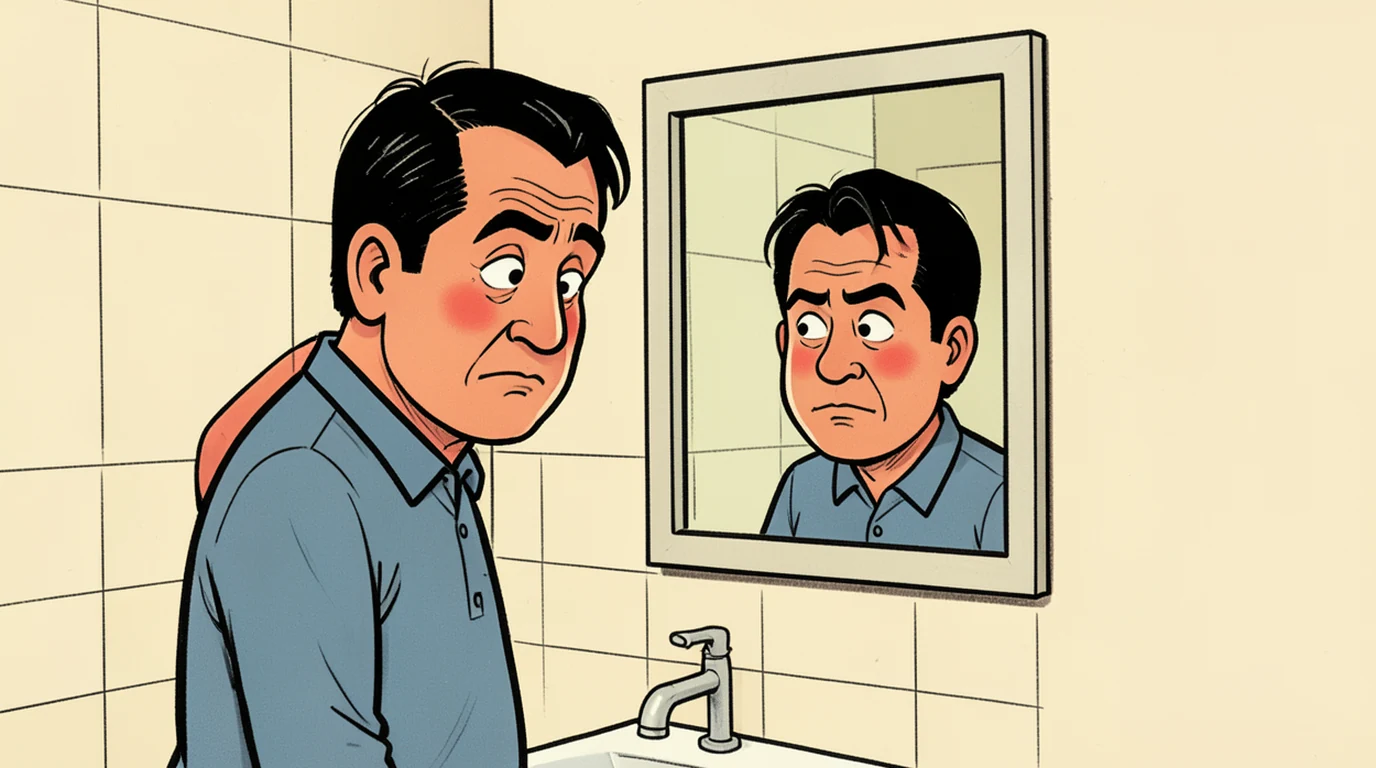
Why do I hate myself? The seven reasons
Almost nobody has one. Most people have two or three, stacked. Under each one there is a line to check against your own life.
1. Somebody taught you the words.
Self-hatred is learned. Clinics list the same source first every time: a childhood with criticism, coldness, unpredictability, or worse. It does not take an obvious catastrophe. A teacher who called you stupid delivers the message just as cleanly as anything at home. Years later the sentences are still in the same voice, and you have stopped noticing whose voice it is.
What it costs: you defend everybody except yourself.
This is you if you can hear who says it when the thought arrives.2. It was safer to blame yourself.
A child who is treated badly has two options: the people I depend on are dangerous, or there is something wrong with me. The second is more bearable, because it comes with a way out: be better and it stops. That trade keeps working until you are thirty and it is still running. And when something bad happens with no explanation, the mind fills the gap the same way.
What it costs: you carry other people's behaviour as your own evidence.
This is you if your first move after anything goes wrong is to look for your part in it.3. It is depression talking.
Self-hatred is a listed symptom of depression, and it is one of the parts people find hardest to bear. This is not a small distinction. If the voice belongs to an illness, then arguing with the voice is the wrong job, and treating the illness is the right one. Crying that arrives for no reason often travels with it: why do I cry so easily.
What it costs: years of self-improvement aimed at something that needed treating.
This is you if the enjoyment has gone out of everything, not just out of yourself.4. Worth has to be earned again every morning.
Perfectionism is on every clinical list here. If being good enough depends on the last result, then one bad result is not a bad result, it is a verdict. And the standard moves the moment you reach it.
What it costs: nothing you do can settle the question, because the question was never about the work.
This is you if a compliment feels like a debt.5. Comparison, all day, against everybody.
Comparing yourself with other people at work, at school and on a screen is named as a cause by every source behind this article. Researchers can measure the result: after exams, students carry pride, shame and self-loathing as separate, stable feelings, and shame is the strongest of the three, even among the students who did well. When the comparison turns into a verdict about how the room sees you, that has its own answer: why do I feel like everyone hates me.
What it costs: your own progress becomes invisible, because it is only ever measured against somebody else's.
This is you if a win only counts when nobody nearby did better.6. Something happened to you.
This is the heaviest one, and the evidence is direct. In a study of psychiatric patients, childhood maltreatment, and emotional abuse in particular, predicted self-hatred, and self-hatred was the step between what happened and later self-harm. If this is your reason, the work is not about confidence. It is about what was done to you, with somebody trained to handle it.
What it costs: the person who hurt you keeps their opinion of you in your own voice.
This is you if the feeling has a date, and a room, attached to it.7. It is doing a job for you.
The last one is the one nobody expects. Self-hatred is protective. If you have already decided you are worthless, nobody can spring it on you, and no rejection can arrive as a surprise. Getting there first feels like control. Getting there first with people has its own answer: why do I push people away.
What it costs: you carry every rejection you were never going to get.
This is you if you say the harsh thing about yourself before anybody else can.Why do I hate myself when my life is fine?
This is one of the most searched versions of the question, and it turns up on forums in exactly that shape: a settled life, the same feeling, and no idea why. It deserves an honest answer rather than a neat one.
Not one of the sources behind this article answers it directly. What they offer is three partial explanations, and they are worth knowing.
- It is a habit, not a reading. The voice was learned long before your current life, and it does not update when the circumstances do.
- It is a lens, not a report. Clinics describe self-hatred as a distortion in how you see yourself, which means it is not measuring your life at all.
- A good life and the wrong life are not the same. One clinician's framing is that people can be doing well by every visible measure while living out of step with what actually matters to them.
And there is a fourth possibility that costs nothing to rule out: if the low mood is constant and nothing external explains it, that is a reason to see a doctor rather than to work harder on yourself.
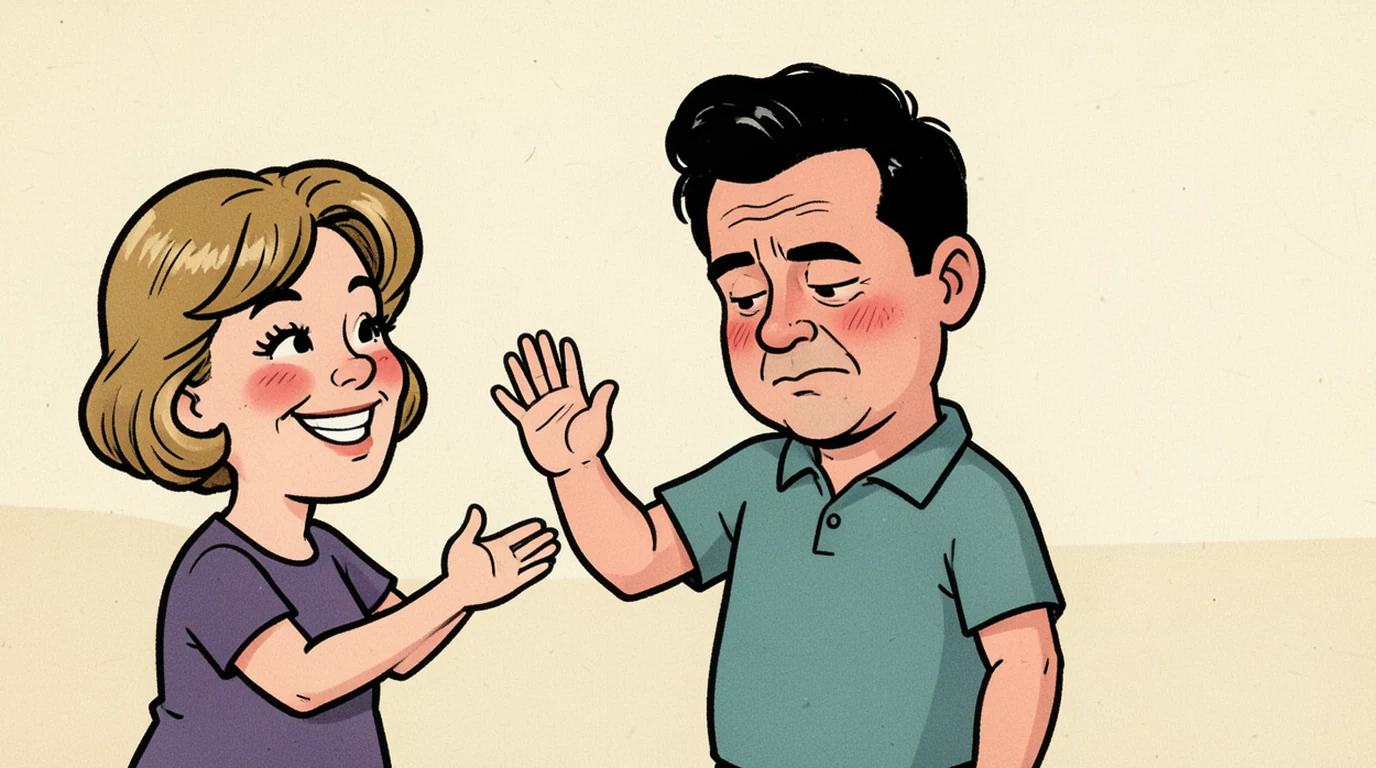
Why do I think I am stupid?
Thousands of people search this every month, and here is what we found: no health service or study behind this article covers it directly. So this section is short and only says what can be supported.
What is documented is where the belief comes from. An explicit message, from a teacher or a parent, lands as a fact about you even when it is untrue. And the thinking patterns that keep it alive are the ordinary ones: all or nothing, one mistake standing for the whole of you, filtering out anything that contradicts it.
What none of those sources can tell you is whether the feeling belongs to something else, such as an attention difficulty or an anxiety pattern. That is a question for a professional, not for an article.
What it takes out of you
In relationships, it is the strange combination of wanting people close and keeping them at arm's length, and of putting up with treatment you would not accept for a friend.
At work, it is the thing you did not ask for and the room you did not speak in.
In your body, it is the sleep, the appetite and the tension that comes with living beside a voice like that.
And there is a loop worth naming. The ways people cope with this feeling, the drinking, the spending, the withdrawing, tend to produce more shame, which produces more of the feeling. Withdrawing has its own measured cost: in one study, self-disgust was the step between being lonely and becoming depressed.
The heaviest costs are measured too, and they are the reason this page carries a crisis box. Self-hatred sits on the path between childhood maltreatment and self-harm. In a study of men who had attempted suicide, self-disgust was described as the last thing they felt. If any of that is close to home, skip to the box below now.
What helps, and what does not
The honest headline first: high self-esteem is not magic. When researchers gathered the studies, having it did predict better outcomes across relationships, work, school and health, but the average effects were small. The goal here is not to love yourself. It is to stop the voice running the day.
What helps
- Therapy that works on the thoughts, and trauma-focused therapy where there is trauma.
- Treating what it belongs to, when it belongs to depression or anxiety.
- Self-compassion, which is a skill rather than a mood, and which tracks with better functioning in the research.
- Saying the sentence out loud, and asking whether you would say it to a friend. (Talking to yourself while you do it is fine: here is why.)
- Aiming for neutral instead of positive. A brain in this state can accept "I did the thing" long before it accepts "I am wonderful".
- Writing it down, so the thought is on paper instead of in the room.
- Being near people, even when everything in you votes against it.
What does not
- Affirmations you do not believe. Standing at a mirror saying you are great while feeling like a failure changes nothing.
- Understanding it. Knowing exactly where it came from does not teach the brain to stop.
- Doing it entirely alone, which every clinical source says plainly.
- Withdrawing from people while you sort yourself out.
- Numbing it, which adds shame to the thing that was already shame.
- Arguing with the voice on its own terms, which gives it another hour of your attention.
Can you stop hating yourself?
The voice can get quieter, and it usually does when the right thing is treated. But here is why the advice on the internet slides off.
Every item on that good list is aimed at one of the seven reasons. Self-compassion practice is aimed at reasons one and four. Treatment is aimed at reason three. Trauma-focused work is aimed at reason six. Noticing the protection is aimed at reason seven.
Run the one built for somebody else's reason and nothing moves. Then that failure goes on the pile as more proof that you are the problem, which is the whole machine, feeding itself.
So the question worth answering is not how to stop hating yourself in general. It is which of the seven is running in your life, and what moves that one.
When this is bigger than a page
Talk to a doctor or a therapist if the thoughts are constant rather than occasional, if they have lasted a long time, if they are getting in the way of eating, sleeping, working or seeing people, or if self-help has not shifted anything. Asking for help is not evidence that you are broken. Clinics say the opposite, and they say it because so many people believe otherwise.
If you are thinking about ending your life, or about hurting yourself, please talk to somebody today.
United States: call or text 988 for the Suicide and Crisis Lifeline, or chat at 988lifeline.org. You can also text HOME to the Crisis Text Line on 741741. In an emergency, call 911.
United Kingdom and Ireland: call Samaritans on 116 123, at any hour, at no charge. For urgent medical help in the UK, call 111. In an emergency, call 999.
Anywhere else: your local emergency number, or an international directory of helplines.
If somebody you love is in danger, stay with them and help them contact one of these.
So which of the seven is yours?
You read them all. You said yes to two, maybe three. Every article stops here, and this is exactly where the useful part starts.
The answer was never going to be in a list. It is in the last three times the voice was loud. What had just happened. Who was in the room. The exact sentence it used, and whose sentence it was first.
Nobody has ever read those three times back to you. Not a friend, not a therapist in a first session, and not you, because you were inside them.
Here is the whole thing, in three steps.
One. You tell us about three times it happened to you, in your own words. Ten minutes, typed or spoken. You give us the day, the time and the place you were born as well.
Two. We read those three times together, and write you why it happens. It is emailed to you within hours.
Three. You read the first part. If it is not you, say so and you get your money back.
What comes back is not advice. It is which reasons are yours and why, the exact sentence the voice uses and where it came from, who is usually in the room, and one small thing to try for thirty days. All of it about you, in your own words.
Where that voice came from, explained from your own life
Written from your three moments and your charts. Your words are in it, in quotation marks, because that is where every line comes from.
It ends with a small experiment for the next thirty days, built for your reason, not for the average of everyone who read this page.
Examples of the shape. Yours are written from your own life.