Everyone tells you a good cry will make you feel better. In the laboratory, that is not what happens.
Researchers showed people a sad film and measured their mood. The ones who cried felt worse straight afterwards, not better. Their mood was back to where it started after about twenty minutes. It only rose above where it started at around ninety minutes.
Two reviews of the whole field say the same thing more carefully: the effects of crying are mixed, they depend on who is with you, and the popular idea that crying releases something has an unclear basis. Crying does not reduce pain either.
What tears may actually be doing is physical. In one study, breathing stayed steady and the heart slowed at the moment crying began, which looks like a body settling itself rather than a mind clearing itself.
So if you cry and still feel terrible an hour later, nothing has gone wrong with you. You are on the normal curve.
If you are thinking about ending your life or hurting yourself, please stop reading and talk to somebody now. In the United States, call or text 988. In the United Kingdom and Ireland, call 116 123. Anywhere else, your local emergency number. This page will still be here.
Is it normal to cry every day?
There is no correct amount of crying. Every health service that writes about it says some version of that: no right or wrong, no rule about how much is too much, and it is a normal part of life at every age.
You will see the numbers anyway. One clinic says women cry four or five times a month and men once or not at all, and credits unnamed research for it. Treat that as a rough average of a very wide range, not as a measurement of you.
Two things matter more than frequency.
- How long it has lasted. Low mood most of the day, nearly every day, for two weeks or more is the line every health service draws for going to a doctor. Ordinary sadness usually eases in hours or days and has a cause you can point at.
- What it is costing you. Crying that gets in the way of your day, or that arrives with hopelessness, or with losing interest in the things you used to enjoy, is worth taking to somebody.
Crying every day on its own is not a diagnosis. Crying every day plus flat, plus nothing is enjoyable any more, is worth an appointment.
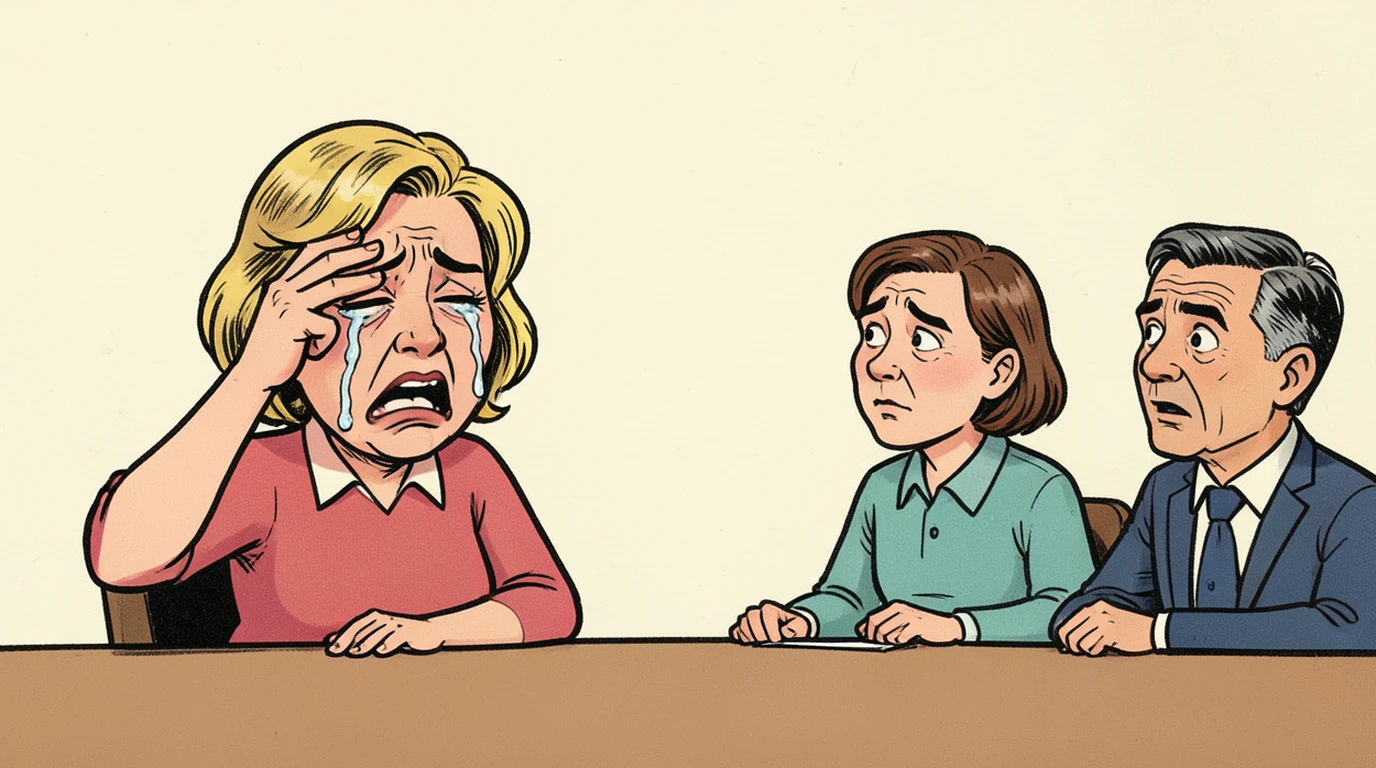
Why do I cry so easily? The seven reasons
Almost nobody has one. Most people have two or three, stacked. Under each one there is a line to check against your own life.
1. You are built to take in more.
Some people take in more of everything: light, noise, other people's moods. If this is you, it was you as a child, and other people's feelings arrive in your body as if they were your own. There is a whole page on that here: why you feel everything more.
What it costs: you are the one who cries at the advert, and you spend the rest of the day explaining it.
This is you if you have always been like this, and you cry at other people's news as well as your own.2. Your chemistry right now.
Tears move with hormones. The week before a period, pregnancy, the months after a birth, the long turn of menopause, a thyroid running fast or slow, and some prescriptions as a listed side effect. This is the cheapest one to rule out and the one people leave the longest. A doctor can check the thyroid and review the medicines in one appointment.
What it costs: months of working on your mind for something in your blood.
This is you if it started within weeks of a new prescription, a birth, or a change in your cycle.3. Sleep, and how much you are carrying.
Tiredness takes away the part of you that holds feelings in proportion, so the same event lands twice as hard. This is not a small effect. In a large review of sleep and mood, people who started with insomnia had more than double the risk of developing depression later on.
What it costs: you judge your character by how you behave on four hours of sleep.
This is you if the crying arrived in the same month as the bad sleep.4. Something is being grieved.
Grief does not only follow a death, and it does not keep to a schedule. A break-up, a diagnosis, a job, a move, a friendship that quietly ended. Even the good changes ask to be processed: the wedding, the baby, the house. It comes back on dates and in seasons, and it comes out sideways on something small.
What it costs: you think you are falling apart over nothing, when you are actually finishing something.
This is you if the tears have a season, or a date, that you have never connected.5. Anger with nowhere to go.
Tears of rage are their own thing, and they are common enough to have a name and a research literature. The feeling underneath is usually hurt, embarrassment, betrayal or unfairness, and the anger and the sadness arrive together rather than one after the other. If you were taught that anger was not allowed, it will find the exit that was. If the anger gets out more often than the tears, read why am I so angry all the time.
What it costs: you cry in the argument, the argument stops, and the thing you were angry about never gets said.
This is you if the tears arrive when you are furious, not when you are sad.6. The time of year.
This one is measurable. Researchers found that the brain's turnover of serotonin was lowest in winter, and that it rose directly with the number of hours of bright sunlight. Fifteen minutes of daylight is one of the few pieces of self-help with real evidence behind it.
What it costs: every January you conclude something new about your life that is actually about the light.
This is you if you could put the bad weeks on a calendar and they would land in the same months.7. Depression or anxiety, underneath.
Tearfulness is on the symptom list for depression at every health service that publishes one. And it does not always come with feeling sad: it is possible to be depressed without a low mood, and to have crying outbursts that surprise you. Anxiety does its own version, where the worry runs until the tears arrive. Both are treatable, and every health service says the same thing about timing: go sooner rather than later. When the voice inside turns on you as well, read why do I hate myself.
What it costs: you treat an illness as a personality, and then blame the personality. The same mistake wears another name: why am I so lazy.
This is you if the enjoyment has gone out of things you used to like.When the crying does not match what you feel
There is a pattern almost no article about crying explains, and it is worth knowing because it is treatable.
Some people have episodes of crying, or laughing, that do not fit the situation and do not match what they feel inside. It happens after damage to the brain or the nerves: a stroke, a brain injury, multiple sclerosis, and some other conditions that affect the brain. Clinicians have a name for it, and the treatment is usually a low dose of an antidepressant, which works differently here than it does for depression. A review of excessive crying after stroke found the same thing.
Most people who cry easily do not have this. But if your episodes come out of nowhere, stop as suddenly, and feel like something happening to you rather than something you are feeling, tell a doctor. Many people never mention it.
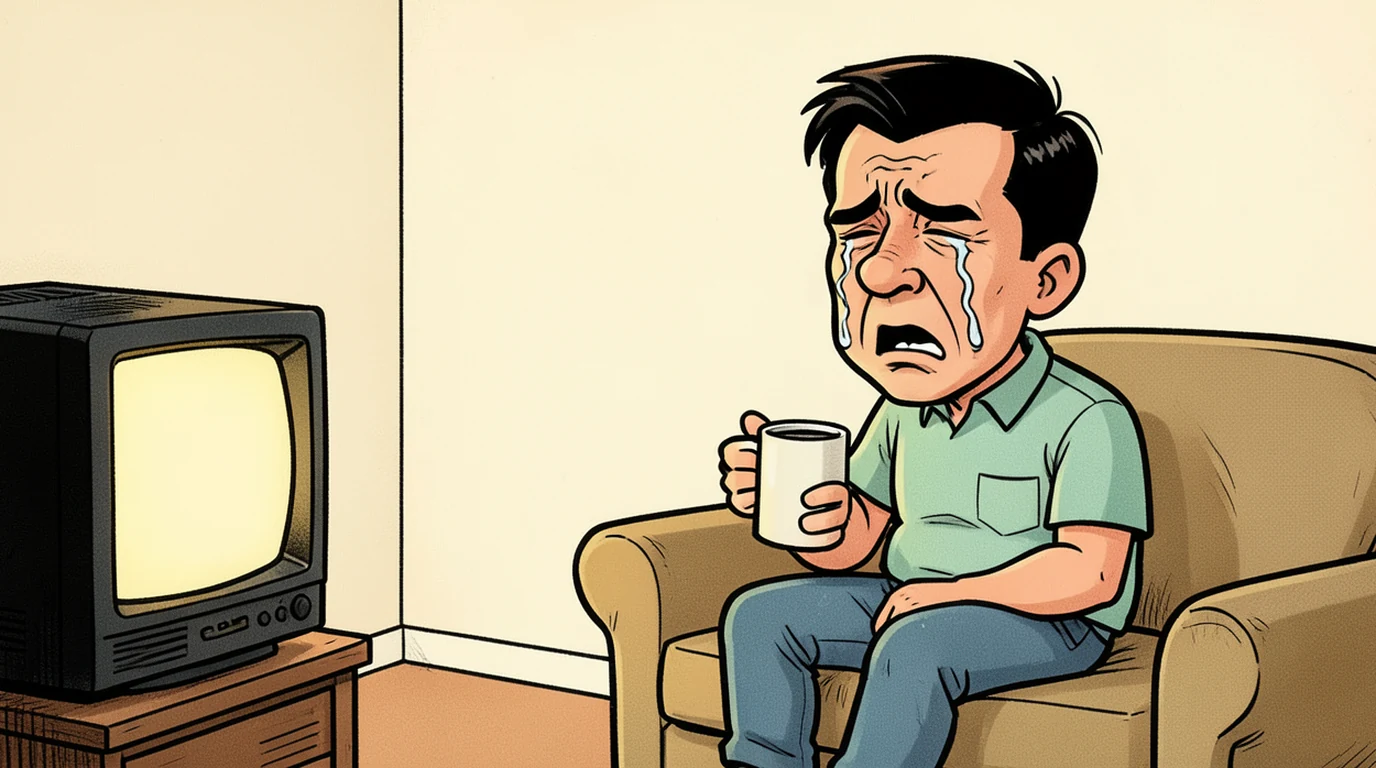
Why do I cry for no reason?
Because the reason is rarely in the room with you.
Health services are direct about this: low mood can arrive without an obvious cause, and depression can begin without an external one. That is not the same as having no cause. It means the cause is not an event this afternoon.
Three things fill that gap most often. The load you were already carrying, so that the small thing is simply the last thing. Something being grieved that you have not filed as grief. And your chemistry: the cycle, the thyroid, the new prescription.
So the honest answer to "why am I crying for no reason" is that you are not. You are crying for a reason that is not visible from where you are standing, and the way to find it is to look at the last few times rather than at this one.
Why do I cry when I get angry?
Because both feelings are running at once, and tears are the one your body will let out in public.
The trigger is usually not the anger itself. It is what sits under it: being hurt, embarrassed, betrayed or treated unfairly, all of which produce sadness and anger together. Add the way many of us were raised, where one of the two feelings was allowed and the other was not, and the exit gets narrower.
The practical problem is that crying ends the conversation. You get read as upset rather than as serious, and the point you were making disappears.
Two things help, and both are ordinary. Saying the sentence before the tears arrive, which is what assertiveness practice is for. And buying yourself a minute in the moment: cold water, a slow deliberate movement, walking out and coming back.
What it takes out of you
The cost is rarely the tears. It is what you organise around them.
You stop going to the meeting where it might happen. You avoid the conversation, the funeral, the review, the person. Avoiding people out of fear of an outburst is on the clinical list of what this does to a life.
At work it is common and it is quiet. One survey of employees found most people had cried at work at some point. Almost nobody says so out loud.
And there is a cost you may not have thought about: how tears are read. Research on how other people judge crying found that tears believed to be genuine bring sympathy, and tears believed to be strategic damage what people think of you. You cannot control which one you get.
Then the ninety minutes. Every time, you spend an hour and a half getting back to level, and that hour and a half comes out of your day.
What helps, in the moment and over the month
Two different problems, two different lists.
In the moment
- Breathe out for longer than you breathe in.
- Cold water on the wrists or the face.
- Press your tongue to the roof of your mouth.
- Move something: stand, walk to the window, fetch water.
- Say the sentence, then feel it. In that order.
- Leave the room for two minutes and come back.
Over the month
- Tell one person, face to face if you can.
- Thirty minutes of walking. It is on the national health service's own list.
- Fifteen minutes of daylight, especially in winter.
- A sleep time you keep, and meals you do not skip.
- Writing down what happened, instead of holding it.
- The mental health charity's own screening test, if you want a straight answer about depression.
- Treatment where a condition is present. Therapy keeps working after it ends, and medicine takes four to eight weeks to do anything.
What does not help is shorter. Hiding it, which sends it somewhere else. Willpower, because you cannot decide your way out of depression, and everybody who treats it says so. Alcohol and the rest, which work for an evening and cost the next week. And waiting, which is the most expensive of the three.
Can you stop crying so easily?
Some of it, yes. Not by deciding to.
Here is why the advice slides off. Every item on those lists is aimed at one of the seven reasons. Daylight is aimed at reason six. A blood test is aimed at reason two. Assertiveness practice is aimed at reason five. Treatment is aimed at reason seven.
Run the one built for somebody else's reason and nothing changes, and then that goes on the pile as more proof that you are simply like this.
So the question worth answering is not how to stop crying. It is which of the seven is running in your life right now, and what moves that one.
When this is bigger than a page
Make an appointment if the low mood has been there most days for two weeks or more, if you are struggling to cope, if the things you used to enjoy have stopped working, or if the crying is getting in the way of your day. Ask for the physical checks in the same appointment: thyroid, iron, and a look at your prescriptions.
Going sooner is better. Depression responds to treatment, and most people improve with therapy, medicine, or both.
If you are thinking about ending your life, or about hurting yourself, you do not have to wait for an appointment.
United States: call or text 988 for the Suicide and Crisis Lifeline, or chat at 988lifeline.org. In an emergency, call 911. Veterans can call 988 and press 1. There is a Spanish line on 1-888-628-9454.
United Kingdom and Ireland: call Samaritans on 116 123, at any hour, at no charge. For urgent medical help in the UK, call 111. In an emergency, call 999.
Anywhere else: your local emergency number, or an international directory of helplines.
So which of the seven is yours?
You read them all. You said yes to two, maybe three. Every article stops here, and this is exactly where the useful part starts.
The answer was never going to be in a list. It is in the last three times it happened. What the day had already put on you. Who was in the room, and what they said in the minute before. What you did with the rest of that evening.
Nobody has ever read those three times back to you. Not a friend, not a doctor in a ten-minute appointment, and not you, because you were inside them.
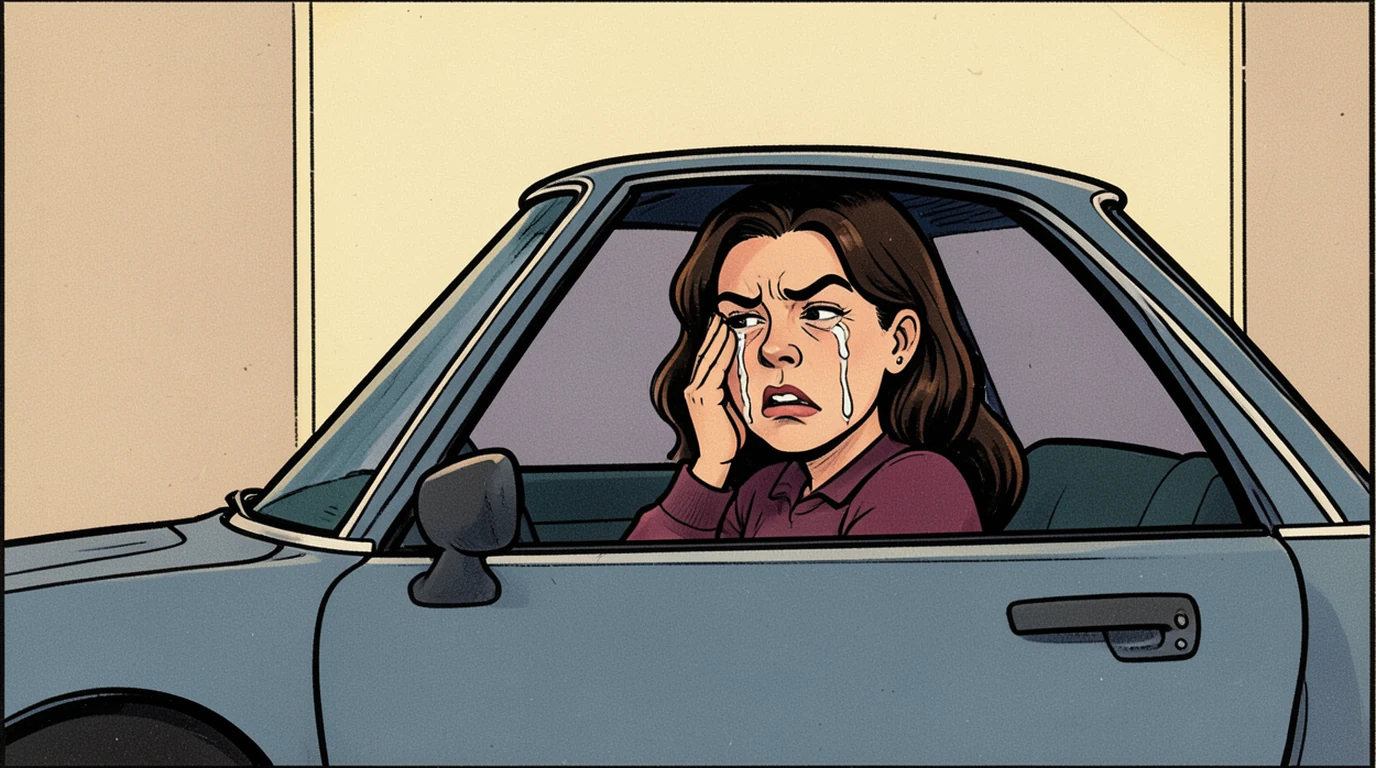
Here is the whole thing, in three steps.
One. You tell us about three times it happened to you, in your own words. Ten minutes, typed or spoken. You give us the day, the time and the place you were born as well.
Two. We read those three times together, and write you why it happens. It is emailed to you within hours.
Three. You read the first part. If it is not you, say so and you get your money back.
What comes back is not advice. It is which reasons are yours and why, what happens in the minute before the tears, who is usually in the room, and one small thing to try for thirty days. All of it about you, in your own words.
Why the tears come, explained from your own life
Written from your three moments and your charts. Your words are in it, in quotation marks, because that is where every line comes from.
It ends with a small experiment for the next thirty days, built for your reason, not for the average of everyone who read this page.
Examples of the shape. Yours are written from your own life.