Start with the word, because the word is doing damage.
Lazy is not a description of a person. It is a verdict passed on one. There is a paper about exactly this, and its finding is the most useful sentence on this page: the judgement is almost never made after anybody has actually looked at the person's motivation or their ability. It gets made from outside, from the behaviour alone.
The author calls it a reductionist explanation, which is a careful way of saying it closes the question. Once you have decided you are lazy, there is nothing left to find out, and nothing left to do except try harder at being someone else.
So for the next ten minutes, put the word down. Something is actually happening. This page is about finding out which something.
Fair warning about the sources, because you will meet them if you keep reading. They disagree three ways and none of them admits it. One group treats lazy against depressed as a real question worth working through. A second says laziness does not exist at all. A third says it is nearly always tiredness with a medical cause. That argument is printed further down rather than hidden.
In the United States, call or text 988. In the United Kingdom and Ireland, call 116 123. Anywhere else, your local emergency number. Thoughts like that are a symptom, not a character flaw, and this page will still be here.
Lazy, or depressed?
This is the question underneath the question, and several sources lay out the same way of telling them apart. It is worth doing carefully.
Closer to a flat patch
- It is about specific things. You avoid the tax return and still meet a friend.
- It lifts when the thing is over, or when something interesting turns up.
- You still enjoy what you enjoy.
- It has been days, not weeks.
- Effort works. Not easily, but it works.
Closer to depression
- It is about everything, including the things you used to like.
- It has been most days for two weeks or more.
- Enjoyment itself has gone quiet. That has a name: anhedonia.
- Sleep, appetite or concentration changed with it.
- Effort does not work, and failing at it makes the whole thing worse.
The line the sources agree on is two weeks of most days, with the enjoyment gone. That is the point where this stops being a motivation question and becomes a health one.
And the part people miss: depression does not always look like sadness. It often looks like not answering messages, staying in bed, and letting things slide. From the outside, and from the inside, that looks exactly like the word you came here with.
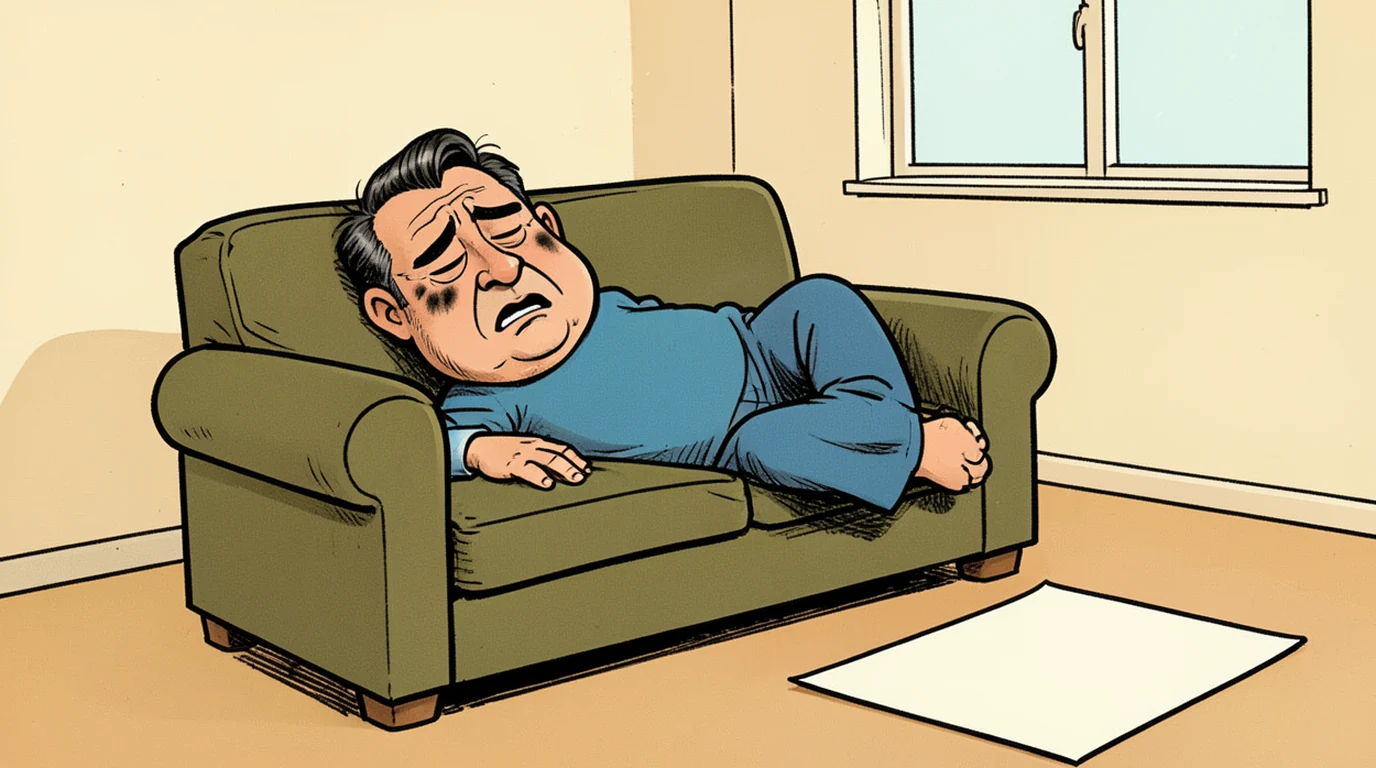
Somebody wrote it on a forum in nine words: "my mum keeps asking me why i'm always lying down."
Is it normal?
Yes, and every source here says so before it says anything else. Nobody is motivated all of the time. Flat weeks are part of having a life rather than a fault in one.
It turns into something worth acting on in four ways.
- It has lasted. Two weeks of most days is the line the sources use, and it is a reasonable one to hold yourself to.
- It is everywhere. Not the one job you hate. The shower, the friend, the food, the thing you used to look forward to.
- The enjoyment went with it. This is the important one, and it is the one people report last.
- You have started explaining it with a word about who you are. Lazy, useless, waste. That is the point where a state becomes an identity, and identities are much harder to shift.
Seven signs, and what each one points at
Read these seven. Say true or false to each one.
One points at reason four. Two points at reason one, and it is the one to take seriously. Three points at reasons two and three. Four points at reason five. Six points at reason six. Five is the one nobody expects: if the tank is empty for you and full for everybody else, that is usually burnout rather than character.
Somebody on a forum described the first sign better than any page: "it feels like something is overriding my brain and not letting me do the things I need to."
The seven reasons people call themselves lazy
Most of the time it is two of these at once, not one. Read all seven. Under each one there is a line to check against your own life.
1. It is depression, and it does not look like sadness.
Every clinical source in this set names this first. Low motivation is one of the hallmarks, and the loss of interest in things you used to enjoy has a name, anhedonia, which is the sign that separates this from a flat week more reliably than anything else. It does not arrive announcing itself. It arrives as unanswered messages and unopened post and a bed that is easier than the room. And it does not respond to effort, which is the exact reason people conclude they are lazy: they tried, it did not work, and they took that as evidence about themselves rather than about an illness. If the voice has turned harsh with it, read why do I hate myself.
What it costs you: the treatable thing goes untreated, while you work on a character flaw you do not have.
This is you if what you used to enjoy has gone quiet too.2. You are burnt out, and it looks identical from outside.
Burnout is depletion after a long stretch of demand, and from any angle it looks like the word you came here with. Worth knowing what the research actually holds, because the term gets used far past it: the literature is about work, the link between burnout and mental illness is still an open question, and the researchers themselves note how little evaluation there is of the things people recommend for it. The paper does not use the word laziness anywhere. Here is the practical test: burnout is specific. You are empty for the demand and often still fine for a friend.
What it costs you: you push a body that needed a stop, and the stop gets taken from you later, larger.
This is you if the emptiness has a start date and a reason.3. Something in your body.
The differential pages all keep a list, and it is worth reading before you diagnose your character: sleep that is broken rather than short, a thyroid out of range, low iron, low B12 or vitamin D, blood sugar, medicines with tiredness in the side effects that nobody mentions at the counter. None of that is in your head and none of it is fixed by discipline. A blood test costs an appointment. A word to be careful with: one page ranking for this question presents itself as medical and its reference list does not resolve to anything, so nothing from it is repeated here, including the parts that are probably true. The same tiredness shows up as forgetting: why am I so forgetful.
What it costs you: a year of trying harder at something a blood test would have named in a week.
This is you if the tiredness is physical and sleeping more does not touch it.4. Starting is the broken step, not wanting.
This is the one that gets called laziness most often and is furthest from it. You want to do the thing. You have wanted to all day. And the step between wanting and beginning is the one that will not fire. Clinicians describe it as trouble with starting, organising and prioritising rather than trouble with desire, and it is a familiar shape to people with attention deficit, where it is a result of how the brain handles that step rather than a shortage of willingness. It is also why advice about wanting it more slides straight off.
What it costs you: you are judged, including by yourself, on the one step you cannot do, by people watching all the ones you can.
This is you if you can describe the task in detail and cannot begin it.5. Fear is wearing the costume.
Look at what you avoid most. If it is the things that matter most, this is not indifference. It is the opposite. Somebody on a forum wrote the whole reason in twelve words: "I avoid everything I care about because failing at it hurts more than doing nothing." Not starting keeps the thing perfect and keeps you untested, and it costs nothing today. When the same standard shows up as sabotaging the work itself, that has its own page: what is self-sabotage.
What it costs you: you protect the thing you want by never touching it.
This is you if you are busy about small things and frozen about the one that matters.6. There is nothing for it to aim at.
Motivation is not a substance you have or lack. It runs towards something, and if there is nothing it is pointed at it looks exactly like an absence. Several sources put this at the top of their lists: work that no longer fits who you are, goals somebody else set, a stretch of life with no answer to why. One writer puts it bluntly: many people who look lazy are not, they simply have not found the thing they want to do. That is worth taking seriously before you take the tiredness seriously.
What it costs you: you look for the fault inside yourself when it is sitting in the calendar.
This is you if you are unmotivated at work and full of energy about something nobody pays you for.7. Too much choice, and something easier in your hand.
Two things that flatten a day and are nobody's fault. First, choice: in a well-known experiment, shoppers offered six kinds of jam were far more likely to actually buy one, and were happier with what they bought, than shoppers offered twenty-four. Too many options does not feel like freedom from the inside. It feels like being unable to start. Second, every task you might begin is competing with something in your pocket that is easier and more rewarding immediately. That will not be the whole answer for anybody, and it makes all six of the others harder to act on.
What it costs you: the gap between deciding and starting fills itself, every time.
This is you if the day disappears without a single decision in it.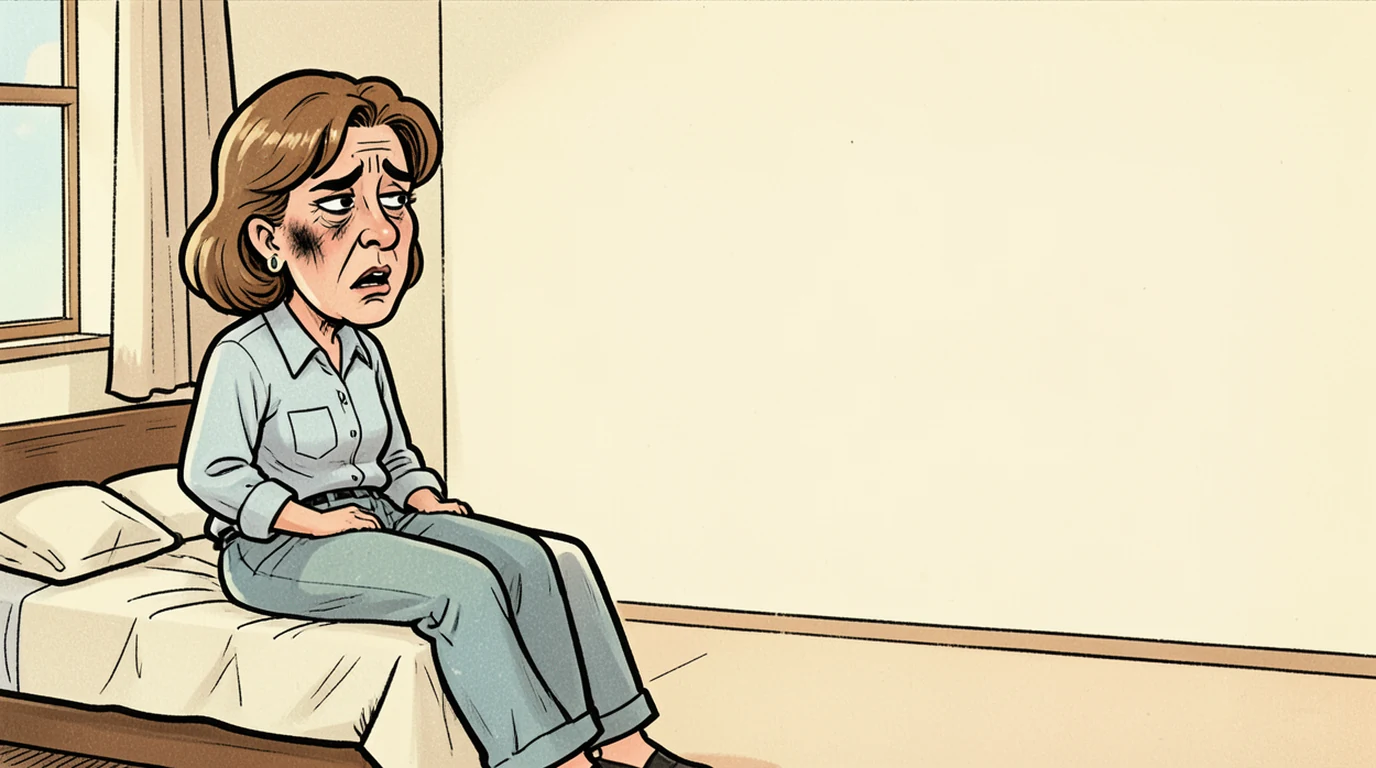
The words a clinic would use
There are proper words for this, and none of them is laziness. They are worth having, because they make it possible to describe what is happening to somebody who can help.
- Apathy is the feeling: a loss of motivation and interest, and a flatness towards things that used to matter. Doctors treat it as a symptom rather than as a trait.
- Avolition is the behaviour: not getting started on goal-directed things at all. One useful way to hold the two apart is that apathy is what you feel and avolition is what you do, or rather do not.
- Neither is laziness, and that is not a kindness either. They belong to conditions, they are recognised, and they are approached differently.
Why this matters practically: walking into an appointment and saying you have been lazy invites agreement and a shrug. Saying that for three weeks you have not started anything you meant to, and that things you used to enjoy have gone flat, describes something a doctor can work with.
What it takes out of you
Less about consequences than about the shape of it, because the shape is what keeps it running.
- The label costs the most. Every source that mentions it says the same thing: calling yourself lazy does not produce action, it produces shame, and shame produces less action. It is the one intervention everybody here agrees is counterproductive.
- The week shrinks. You do less, so there is less that went well, so there is less evidence that you are somebody who does things, so you do less. It closes quietly and quickly.
- The treatable thing waits. This is the real cost. Depression, a thyroid, an attention difficulty and burnout are all approached differently and all improve with the right approach. None of them improves while it is being treated as a character flaw.
- And doing nothing is not restful. There is even research on this: people put in forced idleness were less happy than people given something to do, even when the something was invented. The stillness you fall into is not the rest you need.
What helps, and what the sources argue about
One thing has near-total agreement here, across clinicians, writers and forums alike: action comes first and motivation follows, not the other way round. Waiting to feel like it is waiting for a bus on a road with no route.
The honest limit, which none of the pages saying it will tell you: the evidence behind that idea is behavioural activation, which is a treatment for depression. Using it as advice for an ordinary flat fortnight is a reasonable step, and it is a step past what the research says. Take it as a good bet rather than a proven one.
The second thing with a study behind it is not a tactic either. After a failure, people who were told to be kind to themselves about it spent longer studying and reported more motivation to work on the weakness than the groups who were not. Being hard on yourself is not the engine. It is the handbrake.
What helps
- Make the first step embarrassingly small. Two dishes. One paragraph. Open the curtains.
- Ten minutes with permission to stop. Most of the difficulty is in the first minute of the ten.
- Cut the options. Choose from three, not thirty. It is one of the few things here with an experiment behind it.
- Sleep, food, daylight, and a blood test if the tiredness is physical.
- Do it beside somebody, or at a fixed time, so the starting is not a decision you have to make again.
- Ask what it is for. If the honest answer is nothing, that is the problem to work on, and no amount of discipline replaces it.
What does not, and what is contested
- Calling yourself lazy. Unanimous across the sources. It is a verdict, not a plan, and it makes the next day harder.
- Willpower and forcing. Also unanimous, and stated most sharply about depression: it is not something a person can decide their way out of.
- Waiting for motivation to arrive. It arrives after the movement, not before it.
- Productivity systems, when the cause is medical. A better calendar does not treat a thyroid.
- Contested: whether laziness exists at all. One set of sources builds a careful test for telling it from depression. Another says the concept is empty and that rest is strategic. A third says it is nearly always physical. They are all on the first page of results and none of them mentions the others.
When this is bigger than a page
Talk to a doctor if it has been most days for two weeks or more, if the enjoyment has gone out of things you used to like, or if the tiredness is physical and sleep does not touch it.
Ask for two things in the same appointment: a check of the ordinary physical causes, and a straight conversation about mood. They are often looked at separately, and here they belong together.
You do not need it to be severe to be worth an appointment. In the United Kingdom you can refer yourself for talking therapy without going through your doctor first.
In the United States, call or text 988 for the Suicide and Crisis Lifeline, or use the chat at 988lifeline.org. You can also text 741741 for the Crisis Text Line. If somebody is in danger now, call 911 or go to your nearest emergency room.
In the United Kingdom and Ireland, call 116 123 for Samaritans, at any hour, at no charge. In Scotland you can call NHS 24 on 111. Anywhere else, your local emergency number.
Nothing on this page is a substitute for any of them.
So which of the seven is yours?
You read them all. You said yes to two, maybe three. Every article stops here, and this is exactly where the useful part starts.
The answer was never going to be in a list. It is in the last three times it happened. What the day had already taken. What you did instead, and for how long. What you said about yourself at the end of it.
Nobody has ever read those three times back to you. Not a friend, who saw the outside of them. Not a doctor in ten minutes. And not you, because you were inside them.
Here is the whole thing, in three steps.
One. You tell us about three times it happened to you, in your own words. Ten minutes, typed or spoken. You give us the day, the time and the place you were born as well.
Two. We read those three times together, and write you why it happens. It is emailed to you within hours.
Three. You read the first part. If it is not you, say so and you get your money back.
What comes back is not advice. It is which reasons are yours and why, what the day had already taken before it started, what you reach for instead, and one small thing to try for thirty days. All of it about you, in your own words.
Where your energy actually goes, explained from your own life
Written from your three moments and your charts. Your words are in it, in quotation marks, because that is where every line comes from.
It ends with a small experiment for the next thirty days, built for your reason, not for the average of everybody who read this page.
Examples of the shape. Yours are written from your own life.