Every page on this subject answers the same way: they probably do not hate you. That is a guess dressed as a fact.
Here is the measured version, and it is better than the guess.
Researchers put strangers together to talk, then asked each of them two things: how much did you like the other person, and how much do you think they liked you. People got the second one wrong, in the same direction, over and over. They thought they were liked less than they were. The researchers named it the liking gap, and it did not close after one meeting. Among students sharing a room, it was still there months later.
One thing to be careful with. That is an average across a lot of people, not a law about you. A popular page on this question turns it into "everyone was more liked than they thought". The study does not say that. It says most people are wrong in the same direction, and the direction is down.
So the useful question is not whether they hate you. It is why your reading of a room keeps landing lower than the room does.
In the United States, call or text 988. In the United Kingdom and Ireland, call 116 123. Anywhere else, your local emergency number. This page will still be here.
Is it normal to feel like everyone hates you?
Yes, and every health service that writes about it says the same thing in the same order.
Low self-esteem is not an illness. NHS inform in Scotland says it is not a medical condition on its own. Mind says the same, and adds the part that matters: it is not a mental health problem by itself, but it and mental health pull on each other.
So the feeling on its own is ordinary. It turns into a problem in four ways, and you can check them tonight.
- It is there nearly every day. Doctors use two weeks as the line for the symptoms that sit near this one, and it is a reasonable line to use on yourself.
- It survives evidence. Somebody tells you plainly that they like you, and it holds for an hour.
- It is everywhere at once. Friends, family, work, the person you live with. When it shows up in all of them in the same week, the thing they have in common is you, and that is worth knowing gently rather than harshly.
- You have started avoiding people to avoid the feeling. This is the important one. Avoidance is the thing that grows it.
One more line, because it is the part people find hardest to believe. Feeling worthless is one of the nine things doctors look for when they are deciding whether somebody has depression. It is not a character flaw. It is a symptom with a name, and it is treated.
Is it real, or is it the feeling?
Almost every page on this question skips straight to the answer that it is all in your head. That leaves out the reader who is genuinely in a bad room, and there are plenty of them.
So do this part first. Only one page on this question is willing to draw the line, and it draws it well.
Real dislike is behaviour
- They avoid you when there is no reason to, more than once.
- They say no and never offer another day.
- You are left out of things in a pattern, not once.
- It is the same people, doing the same thing, over months.
The feeling runs on silence
- A message with no reply yet.
- A face that changed for a second.
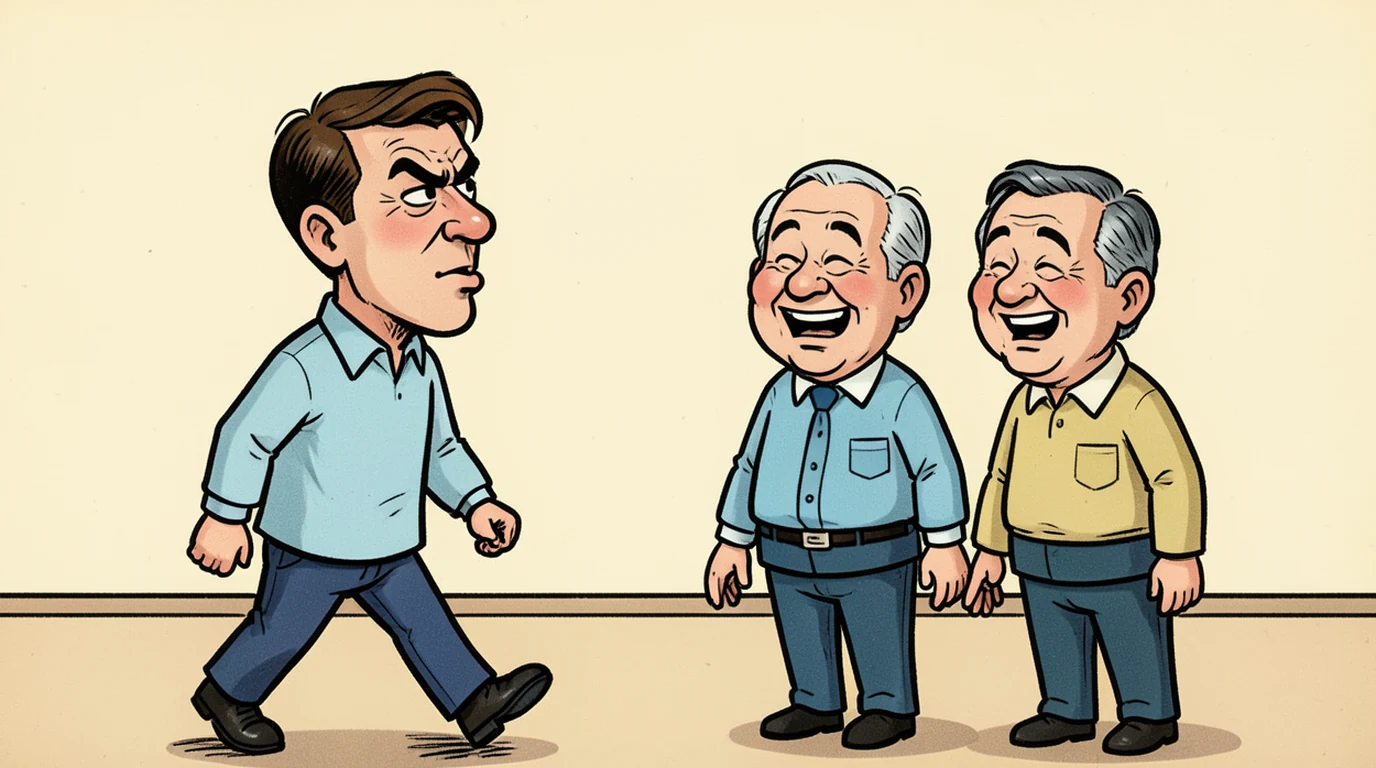
- Two people laughing as you walk in.
- A short answer from somebody who is busy.
Here is the test. Write down what actually happened, in the words you would use if a friend told you about it. Then read what is left.
If what is left is a set of silences, this page is about you and it goes on below. If what is left is a list of repeated behaviours by the same named people, that is not a feeling. That is information, and the answer is a different room, not a different you.
Seven signs it is the feeling and not the room
Read these seven. Say true or false to each one.
Five or more true is the shape the signs lists describe. Somebody on a forum put the seventh one better than any of them: "I always feel like I am just taking up too much room and my presence is barely being tolerated."
Now the part the lists leave out. Signs tell you the feeling is there. They do not tell you which of the seven reasons below is running it, and that is the part that decides what would help.
The seven reasons people feel like everyone hates them
Most of the time it is two of these at once, not one. Read all seven. Under each one there is a line to check against your own life.
1. Your mind fills the silence.
Nobody answers, and your mind writes the reason. Clinicians call it mind reading: deciding what somebody thinks with no evidence. It rarely travels alone. It brings taking neutral things personally, and noticing only the things that fit what you already believe. Once those three run together, an ordinary day cannot disprove anything, because every quiet moment gets filed as proof.
What it costs you: you answer a message that nobody sent.
This is you if you can tell me what somebody thought of you, and not how you know.2. Somebody taught you it young.
The NHS and Mind both put the start of low self-esteem in childhood: being criticised, ignored, bullied, or held to a standard nobody could reach. There is a measured version of this too. In a study of more than a thousand adults, the link between being badly treated as a child and being depressed as an adult did not run directly. It ran through three things: how feelings get handled, a habit of blaming yourself when something goes wrong, and the marks left by trauma. The habit in the middle is the one you can still hear in your own voice. When it turns all the way inward, the question stops being about them and becomes why do I hate myself.
What it costs you: you meet new people through the mouth of an old one.
This is you if the voice that says it has an accent you recognise.3. Your worth is rented, and the rent is due daily.
Children of five and six were praised or criticised in two different ways: for who they were, or for what they had done. The ones told about themselves gave far more helpless answers after a small failure, and turned on themselves. That is where a worth that has to be re-earned gets installed. And it is expensive to keep. First-year students whose worth rested on outside things reported more stress, more anger, more trouble in class and more conflict at home. Basing your worth on your grades did not improve the grades.
What it costs you: one bad week can take back everything ten good years built.
This is you if a compliment lasts an afternoon and a slight lasts a month.4. Depression is saying it, and it uses your voice.
This is not a mood problem, which is exactly why cheering up does not touch it. Researchers mapped how the symptoms of depression hang together across more than forty thousand students and a group of patients in hospital. Feeling worthless did not sit with the loss of pleasure or the loss of energy. It sat with hopelessness and with blaming yourself. It is also the part that stays: among people whose depression had lifted, more than eight in ten still carried self-blaming feelings, and most of them called it the symptom that bothered them most of all.
What it costs you: you treat an illness as a personality, and then you blame the personality.
This is you if it is already there in the morning, before anything has happened.5. The room itself is the fear.
For some people this only exists where other people are. Social anxiety runs a loop, and the loop is tidy. You expect to be judged. So you watch yourself instead of the conversation. So the conversation goes badly, because you were not in it. And that becomes the evidence for next time. Clinicians name this feeling as one of the clearest marks of social anxiety rather than a fact about how likeable you are.
What it costs you: every room costs double, because you are in it and watching yourself be in it.
This is you if it goes quiet the moment you are alone again. If it does not go quiet, read why am I so lonely.6. You are more alone than you used to be.
Alone, nothing corrects the story. The clinicians who write about this all describe the same slide: the less contact you have, the more sensitive to rejection you get, and the rustier the ordinary skills become. Then reaching out feels harder than it was a month ago, which keeps you where you are. If the distance is something you built on purpose, that has its own answer: why do I push people away.
What it costs you: the thing that would settle it is the exact thing you stopped doing.
This is you if it got louder in a month when your calendar got emptier.7. You are trying to buy it.
No health page covers this one. The forums are full of it. You give, you cover, you say yes, you put yourself last, and you wait for it to come back as being liked. It usually does not. People take the help and do not feel any closer, because help is not the same as closeness. Then you feel used, and you decide they never liked you in the first place. One person wrote it plainly: "I am a people pleaser to the point that I will put their needs over my own." When the giving starts in the first fortnight with somebody new, that has its own page: why do I get attached so easily.
What it costs you: you build the relationship on a service, then get angry that nobody is paying for it.
This is you if you cannot name one thing you asked somebody for this month.
And the other version: why do I feel like a failure?
Different words, same meter. One is about people and one is about output, and both run on a worth you have to earn again this morning.
The pages that answer the failure version agree on the mechanism. You compare yourself against people whose middle you cannot see. You hold a standard somebody else set. And you let one word carry far too much: failure is a label for a person, and what actually happened was a thing that did not go the way you planned. Saying the second one out loud does more than it sounds like it would.
There is a clinical version too. A fear of failure strong enough to stop somebody entering the thing they want has a name, atychiphobia, and health services describe it as avoidance rather than laziness. When the same standard starts stopping the work itself, that has its own page: what is self-sabotage.
One number to leave behind. A figure travels around this subject, that fifty-three out of a hundred men in the United Kingdom feel like failures. The page that prints it names no researcher, no year and no link. We looked and could not find it anywhere. So it is not on this page, and it should not be in your head either.
What it takes out of you
You probably know most of this. It helps to see it in one place.
- Your people. The fear works. You expect the rejection, so you close a little, so people read it as coldness, so they step back. Then you have your evidence. The sources behind this article all describe this loop, and they use the same phrase for it: it becomes self-fulfilling.
- Your days. Avoidance is the tax. The room you skipped, the message you wrote and never sent, the job you did not apply for because the interview would find you out.
- Your mind. Feeling worthless travels with hopelessness, and health services link long stretches of low self-esteem to depression and anxiety.
- Your body. It arrives first in sleep, and then in what you drink and what you eat.
- The one to watch. In the United States, the large national survey found that most people with depression say it makes work, home or social life difficult, and fewer than four in ten had any counselling in a year. The gap between having it and treating it is the whole problem, and it is not made of willpower.
What helps, and what keeps it going
An honest note first. There is one properly tested thing on this page. Across four hundred and nine trials and more than fifty thousand patients, talking therapy of the cognitive kind clearly beat doing nothing for depression, and beat medicine alone when the two were used together. Everything else below is what experienced clinicians recommend, and it is worth trying in that spirit rather than as medicine.
What helps
- Write what happened in one column and what you decided it meant in another. They look different side by side.
- Make three other explanations before you keep the first one. Boring ones count: they were tired, they were driving, they forgot.
- Ask once, plainly. "Are we ok?" beats a week of reading a face. Ask once, then stop.
- Keep the things people actually said. A note on your phone, four lines long. Read it on a bad evening, not a good one.
- Aim the words at what you did, not at who you are. "That went badly" is a fact you can use. "I am bad at this" is not.
- Go first with something small. A hello. A message with no question in it. A coffee at a fixed time.
- Sleep and eat before you conclude anything. Nothing you decide about yourself at one in the morning is information.
What keeps it going
- Asking again and again. Reassurance settles it for an hour and makes the next hour worse, and clinicians name this as the thing that keeps the whole pattern alive.
- Going back over the evening afterwards, looking for the clue.
- Cutting people off first, so that nobody gets to do it to you.
- Telling yourself to think positive. Nobody has ever argued a belief away by ordering it to leave.
- Comparing. Nobody's middle is visible from outside.
- Buying it with favours. See reason seven.
- Drinking to get through the room. It borrows the evening from next week.
Can it be fixed for good?
Nobody honest promises that, and self-esteem is not one number you set once and keep.
But it does move, and there is a measurement of it moving. Researchers followed more than three and a half thousand Americans for sixteen years. Self-esteem rose through adult life and reached its highest point around the age of sixty. Whatever this is, it is not a fixed property of you.
Which leaves the question that actually decides what to do next, and it is not the one you typed. It is which of the seven is running yours.
A tip is aimed at a cause. Write the evidence down is aimed at reason one. Ask once and stop is aimed at reason five. Stop covering for people is aimed at reason seven. Sleep is aimed at reason four. Aim the right one at the wrong reason and it slides off, and then you decide the problem is you, which is the belief you came here with.
When this is bigger than a page
Talk to a doctor if the feeling has been there most days for two weeks or more, if it comes with hopelessness or with losing interest in things you used to like, or if it has started deciding where you go and who you see.
You do not need it to be severe to be worth an appointment. In the United Kingdom you can refer yourself for talking therapy without going through your doctor. Ask for the shortest version of the conversation if a long one feels impossible.
In the United States, call or text 988 for the Suicide and Crisis Lifeline, or use the chat at 988lifeline.org. You can also text 741741 for the Crisis Text Line. For help with drink or drugs, the national helpline is 1-800-662-4357, open all day and night at no charge.
In the United Kingdom and Ireland, call 116 123 for Samaritans, at any hour, at no charge. In Scotland you can call NHS 24 on 111. Anywhere else, your local emergency number.
Nothing on this page is a substitute for any of them.
So which of the seven is yours?
You read them all. You said yes to two, maybe three. Every article stops here, and this is exactly where the useful part starts.
The answer was never going to be in a list. It is in the last three times it happened. What the day had already put on you. Who was in the room, and what they actually said in the minute before. What you did with the rest of that evening.
Nobody has ever read those three times back to you. Not a friend, who was not there. Not a doctor in ten minutes. And not you, because you were inside them.
Here is the whole thing, in three steps.
One. You tell us about three times it happened to you, in your own words. Ten minutes, typed or spoken. You give us the day, the time and the place you were born as well.
Two. We read those three times together, and write you why it happens. It is emailed to you within hours.
Three. You read the first part. If it is not you, say so and you get your money back.
What comes back is not advice. It is which reasons are yours and why, what happens in the minute before you decide somebody is done with you, who is usually in the room, and one small thing to try for thirty days. All of it about you, in your own words.
Why the room feels like that, explained from your own life
Written from your three moments and your charts. Your words are in it, in quotation marks, because that is where every line comes from.
It ends with a small experiment for the next thirty days, built for your reason, not for the average of everybody who read this page.
Examples of the shape. Yours are written from your own life.